Parish Church of Santa Monica / Vicens & Ramos

Parish Church of Santa Monica / Vicens & Ramos


 Architect: Vicens & Ramos / Ignacio Vicens y Hualde, José Antonio Ramos Abengózar
Location: Rivas-Vaciamadrid, Madrid, Spain
Client: Obispado de Alcalá de Henares
Collaborators: Fernando Gil, Agustín Toledano, Roberto Rodríguez-Paraja, Jesús Gómez, Desirée González, Pablo Gutiérrez, Romina Barbieri, Raúl Rodríguez, Tibor Martín, Patricia de Elena
Photographs: Pablo Vicens y Hualde & Ricardo Santonja


“The project whose is already completed is the third proposal. The first two were rejected and it’s a shame. I think that they were much more interesting, at least from the point of view of adherence to the liturgical rules of Vatican II.”
Vicens & Ramos
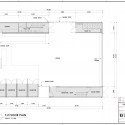
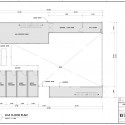
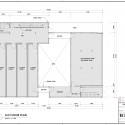
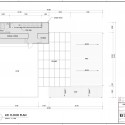
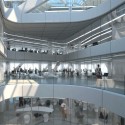
Following the guidance of the Diocesan Council of Temples and the program of requirements provided by the same and later adjusted to the needs of the Parish of Santa Monica, the building design integrates in one building all the spaces that correspond to Church, Parish offices and priest housing.

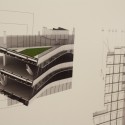
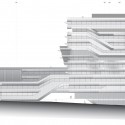
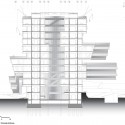
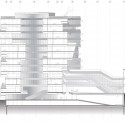
section

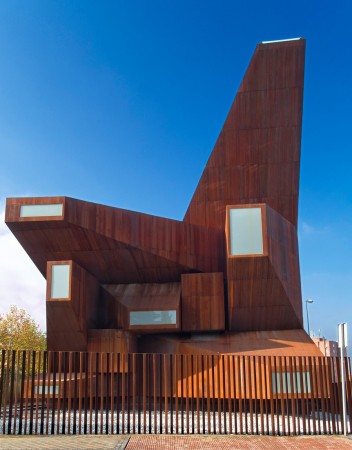
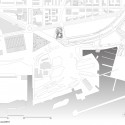
The generating idea of the project was that of situating, within the confusion of the surrounding urban environment, a building that would mark a milestone and become a continuos testimony to the spiritual function produced in its interior, and which must necessarily spread and manifest itself permanently to the nearby social and urban medium.
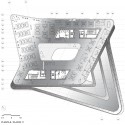
The intention to unify had priority in the conception of the building, that is long and narrow, curved to fit the road along its westerly aspect and cut off abruptly at the north-easterly face. Described by the architect as “an explosion, frozen in an instant after detonation”, the sculptural protuberances at the north end seem to jostle for the light, and almost resemble a hand pointing heavenwards.
 

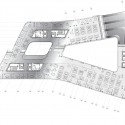
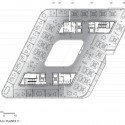
The complex is made up of two independent buildings: one houses the church, strictly speaking, and the daily chapel, in a structure with large steel porticos, while a second block with a structure of reinforced concrete accomodates the housing and parochial rooms. Both are tied together by a continuous corten stell skin which, as a whole, creates a piece that gives an image of great unity and rotundity.
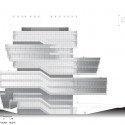
The northern and southern façades are symmetrical except in the building of parochial spaces, where on the northen face the steel skin curves to form the main access to the nave.

At the foot of the nave is located the High Chore, which can be accessed directly from the nave by a stairwell and has a seating capacity of 77 and a common lightning system with that of the rest of the nave. The most public and daily zones turn towards the Avenida de la Integración, while the bedrooms face the interior street.
More info about Vicens & Ramos over here.


Spaceport America began construction last Friday

Spaceport America began construction last Friday

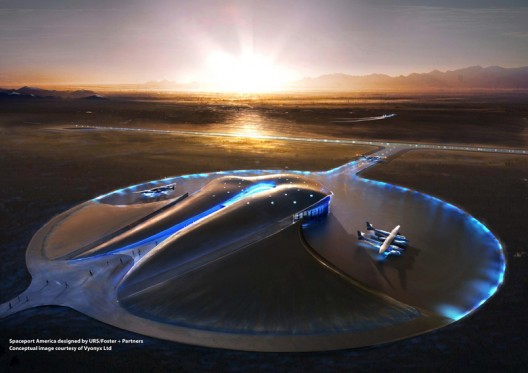
Spaceport America, the first spaceport ever began construction last Friday in New Mexico. The spaceport, designed by Foster + Partners and URS Corporation will host commercial operations by private space travel companies, like Virgin Galactic.
The 110,000-plus square foot facility will use cost-effective, energy-efficient green building practices and will be built to be LEED-certified. From earth-tubes that will pre-condition the air to reduce HVAC costs by 50-70% to solar thermal panels on the roof for hot water to the embedded in-floor loop system, Spaceport America is both unique and iconic in terms of visual and environmental design.

Seen at Gizmodo. More images after the break.


هتلهای عجیب

هتل شناور در سوئد

در این هتل همه امور اجتماعی در جریان هست و مهمانان میتوانند از هوای خوب و دریای بی کران لذت ببرند و شبها در کنار صدای امواج به خواب بروند

Floating Hotel in Sweden

هتل شن و ماسه در بریتانیا

اولین هتل ماسه ای جهان به شکل یک قلعه در ساحل Weymouth در شهر ساحلی Dorset در بریتانیا است.

Sand Hotel in United Kingdom

هتل جنگل در مکزیک

V-Houses, an amazing jungle retreat near the fishing village of Yelapa in tropical Mexico. این دیگه خیلی جالبه . وسط جنگل با حال و هوای بکر طبیعت تازه اونم با همچین معماری عالی و عجیبی . درست شبیه اهرام وارونه هستند اما خودشون بهش میگن موشک هتل .

این هتل در یک جنگل گرمسیر در نزدیکیهای دهکده ماهیگیری Yelapa در کشور مکزیک قرار دارد.

Jungle Hotel in Mexico

Jungle Hotel

هتل یخ در کانادا

یخ هتل منحصر به فرده و هرجور حساب کنید یک تجربه منحصر به فرد و غیر قابل قیاس هست و یه جور خود آزاری هم محسوب میشه .

Ice Hotel in Canada

هتل کپسول در ژاپن

به اینها میگن هتل کپسول . احتمالا باید خیلی هم ارزون باشه . اما من که یاد قفسه های سردخونه افتادم.

Capsule Hotel in Japan

هتل جعبه بقاء در هلند

هتل امدادی ، که استفاده ای دیگه از جعبه بقای هست ، در یک کانال در آمستردام هلند واقع شده است. ازین جعبه ها در پای دکل ها و سکوهای دریایی استفاده می کنند.

Survival Pod Hotel in Netherlands

غار و هتل در ترکیه

یک هتل غیر عادی با فضایی افسانه وار و یک محیط کاملا عجیب و غریب. یه جورایی مثل کندوان خودمونه . فقط اونا میدونن باید چجوری جاذبه هاشون رو معرفی کنن و ما هم فقط تماشا می کنیم.

Cave Hotel in Turkey

هتل هواپیما در سوئد

هم اکنون شما می توانید شب را در یک جت واقعی اقامت داشته باشید.

Airplane Hotel in Sweden


هتل خونه جنگلی در هند

به این میگن یک صمصمیت حقیقی با طبیعت. حیات وحش و آماده برای دریافت تجارب فوق العاده و شگفت انگیز واقع در قلب طبیعت و حقیقت.

Treehouse Hotel in India

هتل زیر آب در فیجی

یک مسکن لوکس در عجیب ترین شرایط ممکن.زیر دریا .. باید خیلی جالب باشه.

Underwater Hotel in Fiji


لوله زه کشی هتل در اتریش

این یکی دیگه باور نکردنیه . این اتریشی ها معماری و سبک کارهاشون همیشه عجیب و غریب بوده.

Drain Pipe Hotel in Austria

ORDOS 100 #41: Single Speed Design

ORDOS 100 #41: Single Speed Design

This villa is located in plot #92 of the ORDOS project.
Architects: Single Speed Design
Location: Ordos, Inner Mongolia, China
Principals in Charge: Jinhee Park AIA, John Hong AIA/LEED
LProject team: Brett Albert, Frederick Peter Ortner, Matt Allen, Caroline Lang, Clara Wong, Bao Wei
Structural Engineer: Paul Kassabian, SGH Inc.
Design year: 2008
Construction year: 2009
-2010
Curator:
Ai Weiwei, Beijing, China
Client: Jiang Yuan Water Engineering Ltd, Inner Mongolia, China

Constructed Area: 1,000 sqm aprox

Early on we noticed that that the overall project siteplan is a cleverly devised urban scale display system for a hundred different architectural experiments. Instead of deploying traditional property lines where no audience can tread, pedestrian easements relentlessly surround every lot. Within the abstraction of the desert, each team is liberated: without formal guilt we are given license to create autonomous product-like villas that can be viewed on all sides by an equally abstract audience.

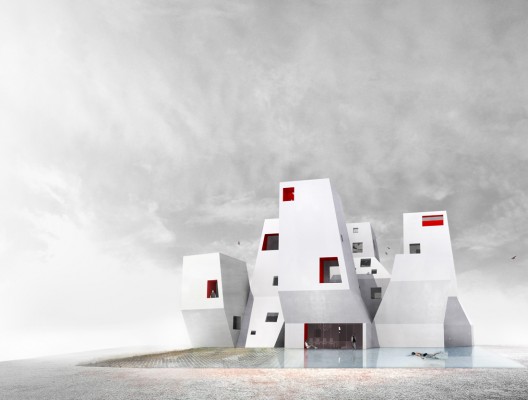
From this cue, we took the opportunity to create a solution that on one hand references the local environment but also offers a more prototypical attitude toward energy savings - a solution that might be adapted to other building types beyond housing. Eight towers are proposed, each containing a separate and distinct program: an entry tower, a living tower, a food tower, a gym tower, 2 bedroom towers, and 2 bathroom towers. Through the distortion of each tower’s geometry, strategic connections and segregations are created. Organizing the program in this way permits greater efficiency, as only one-third of the towers are occupied and require the consumption of energy at any given time during a diurnal cycle. The organizational system also heightens the experiential differences between rooms that are necessarily similar in size, while creating a high level of porosity between interior and exterior spaces.


Dance Palace by UNStudio

Dance Palace by UNStudio

dance-palace-by-unstudio-10.jpg

Dutch architects UNStudio have won a competition to design a dance theatre in  St. Petersburg, Russia.

dance-palace-by-unstudio-1.jpg

Clad in triangular panels of varying opacity, the building will be situated on a new square in the historic centre of the city.

dance-palace-by-unstudio-2.jpg

The two horseshoe-shaped auditoriums will have a combined capacity of 1,300.

dance-palace-by-unstudio-3.jpg

“An essential requirement when we were designing the auditorium was to make it possible to see the dancer’s feet from every seat in the hall at all times, no matter where the performer was positioned on the stage,” explains Ben van Berkel of UNStudio.

dance-palace-by-unstudio-6.jpg

Here’s some more information from UNStudio:
Dance Palace, St. Petersburg, Russia, 2009 - UNStudio/ Ben van Berkel’s design selected for Dance Palace in the historic centre of St. Peterburg
UNStudio’s design has been selected in the competition for a 21,000 square meter dance theatre in the historic centre of St. Petersburg. The new complex houses The Eifman Ballet of St. Petersburg, headed by the prolific choreographer Boris Eifman. From the four projects presented (Jean Nouvel (FR), UNStudio (NL), Snøhetta (NO), ZAO (RU)), UNStudio’s design was yesterday unanimously chosen by the jury for realisation.
The Dance Palace forms an integrated part of the European Embankment city quarter masterplan for a new urban square in the historic centre of St. Petersburg.
According to Ben van Berkel, “The urban context of the building is essential to the design. The Dance Palace is positioned on the square in such a way as to allow for unrestricted visibility towards the nearby Prince Vladimir and Peter and Paul cathedrals, thereby framing some of the most exceptional buildings in St. Petersburg. The sculptural qualities of the Dance Palace reflect those of the surrounding buildings in the masterplan, providing a connection to its surroundings yet still retaining saliency. A central main entrance is incorporated into the façade design in order to fully integrate the building into this lively public square.”

dance-palace-by-unstudio-4.jpg

UNStudio’s design for the Dance Palace presents an open and inviting theatre building with provision for 1300 guests (large auditorium 1000, small auditorium 300). Programmatic considerations focus on the spacious circulation of the public foyer and the transparent relationship to the surrounding public square and the city. Integration with the existing neighbouring buildings is achieved by both the scale of the building - which in elevation follows and respects St. Petersburg’s typical 28m roofline – and the transformative transparency which is introduced by a facade system of triangular cladding panels. The variation between opaque and perforated panels creates a controlled openness, depending on programme, views and orientation.
Ben van Berkel says of the foyer design, “The vertical foyer provides a high level of transparency from inside to outside, whilst also presenting a kind of stage for visitors to the theatre; a place to see and be seen. The open arrangement and balcony structure in the foyer provides plateaus for its own choreography of both intimacy and exposure.”

dance-palace-by-unstudio-7.jpg

The stage
Essential to UNStudio’s design for the main auditorium in the new dance theatre are both the acoustic considerations and the proximity of the audience to the stage. For this reason the horseshoe form was chosen. This form is considered to be one of the most successful forms acoustically in ballet and musical theatre for both performer and audience, whilst the proximity it affords to the stage ensures an intimate and collective experience for the spectator.
dance-palace-by-unstudio-9.gif
Engineering: ARUP
Theatre consultant: theateradvies bv, Amsterdam

dance-palace-by-unstudio-11.jpg

Client: OOO “Peterburg City”
Location: St. Petersburg, Russia
Building surface: 21,000 m2
Building height: 28 m
Status: 1st prize competition entry

dance-palace-by-unstudio-12.jpg

Credits:
UNStudio
Ben van Berkel, Gerard Loozekoot with Christian Veddeler, Wouter de Jonge and Jan Schellhoff and Kyle Miller, Maud van Hees, Hans-Peter Nuenning, Arnd Willert, Nanang Santoso, Imola Berczi, Tade Godbersen, Patrik Noome

dance-palace-by-unstudio-13.jpg

Advisors:
Theatre consultant: theateradvies bv, Amsterdam Louis Janssen, Caroline Noteboom

dance-palace-by-unstudio-14.jpg

Engineering:
ARUP
Jaap Wiedenhoff (Arup director), Soren Svare (Arup Russia), Arjan Habraken (Structures) , Gerard Nouwens (MEP), Pascal Steenbakkers (Fire & coordinator) , Helen Butcher (Acoustics), Rudi Scheuerman (Facades), Sergei Nikigorov (Arup Russia), Sam Wise (Acoustics and Costing), Oleg Romashkin (Arup Russia), Stanislav Korulin (Arup Russia), Lyudmilla Jones (Fire), George Faller (Fire), Daan van Konijnenburg (MEP), Christa de Vaan (MEP)

dance-palace-by-unstudio-15.jpg


Click to join Green_Architects

دوره های عالی دانشگاه تهران

  
 قطب علمی فناوری معماری دانشگاه تهران


   برگزاری سومین دوره توسعه دانش اجرایی و مهندسی ( تداوم )

1. اطلاعیه پذیرش در دوره های عالی تخصصی مدیریت پروژه و ساخت، تکنولوژی معماری، انرژی و معماری

2. سرفصل دروس دوره عالی تخصصی مدیریت پروژه و ساخت

3. سرفصل دروس دوره عالی تخصصی تکنولوژی معماری

4. سرفصل دروس دوره عالی تخصصی انرژی و معماری

5. فرم ثبت نام


 برنامه های در حال اجرا

سلسله سخنرانی های فناوری های نوین ساختمان

انرژی در معماری


Most Beautiful Photography at Night

 
Most Beautiful Photography at Night
 
Most Beautiful Photography at Night

Most Beautiful Photography at Night

Most Beautiful Photography at Night

Most Beautiful Photography at Night

Most Beautiful Photography at Night

Most Beautiful Photography at Night

Most Beautiful Photography at Night

Most Beautiful Photography at Night

Most Beautiful Photography at Night

Most Beautiful Photography at Night

Most Beautiful Photography at Night

Most Beautiful Photography at Night

Most Beautiful Photography at Night

Most Beautiful Photography at Night

Most Beautiful Photography at Night

Bridge

Pedestrian Bridge, Texas

Unique Bridges Around the World


This beautiful arched bridge in Lake Austin was a private build by Miro Rivera Architects and is used to connect the client's main house to the smaller guest house on the other side of the water. The idea was to make the bridge seem as natural as possible within its surroundings and to do this they made the decking and reed-like hand rails as imperfect as possible. The
result is a bridge that looks extremely fragile but definitely worth the risk.

Octavio Frias de Oliveira Bridge, Sao Paulo, Brazil

Unique Bridges Around the World


Opened in May of this year, the Octavio Frias de Oliveira Bridge is a stunning x-shaped cable-stayed bridge that crosses thePinheiros River in Sao Paulo. It's design is unique in that the 2 curved decks of the bridge cross each other through its x-shaped supporting tower, an illuminated structure that stands 450ft tall and has attached to it 144 steel cables.

Kintaikyo, Iwakuni, Japan

Unique Bridges Around the World


The original Kintai Bridge was built in 1673 and didn't stand very long until it was damaged due to flooding. It was then rebuilt and survived for more than 200 years until a typhoon battered it to death in 1950. The bridge that stands now over the Nishiki Riveris the 3rd build and looks magnificent, it's 5 wooden arches displaying an incredible amount of detail and craftmanship. Interesting fact: no nails or bolts have been used to build the arches, only clamps and wires.

Juscelino Kubitschek Bridge, Brasilia, Brazil

Unique Bridges Around the World


The JK Bridge in Brasilia is a lesson in elegant bridge design. The 3 huge arches diagonally hopping over the deck of the bridge give the structure an amazing visual fluidity and make the whole 1.2km bridge look effortlessly cool. Since being built the bridge has won awards for its design but is still massively underappreciated on a wider scale.

Rolling Bridge, London, UK

Unique Bridges Around the World


Thomas heatherwick' s award-winning rolling bridge is an ingenious addition to the grand union canal system in london and is unique in its design. Unlike regular movable canal bridges, the rolling bridge curls up on itself to form an octagon by way of hydraulics. It's an amazing sight and a reminder that a fresh perspective can produce great, innovative results, even when dealing with a structure as common as a bridge.

Beipanjiang River Railroad Bridge, Guizhou, China

Unique Bridges Around the World


Beipanjiang River Railroad Bridge in Guizhou is an enormous railway bridge that was built as part of the much larger 'Guizhou-Shuibai Railway Project'. Connecting 2 mountains over a deep ravine, at its highest point the bridge's deck sits 918ft above the ground (to compare, at its highest point the Millau viaduct's deck clears the river underneath by 890ft). The bridge has succeeded in connecting 2 of the country's poorest areas.

Henderson Waves, Southern Ridges, Singapore

Unique Bridges Around the World


'Henderson Waves' is Wingapore's highest pedestrian bridge and can be found at the southern ridges, a beautiful 9km stretch of gardens and parks which has frequently drawn comparisons to New York's Central Park. The bridge itself is absolutely stunning. The deck is made from thousands of Balau wood slats, perfectly cut and arranged, and along the length of the deck a huge snaking, undulating shell cleverly forms sheltered seating areas on every upward curve.

Pont Gustave Flaubert, Rouen, France

Unique Bridges Around the World


This is the incredible, brand new vertical lift bridge in Rouen, France, a beast of a structure whose 2 bridge spans weigh 1200tons each but can be hoisted 180ft vertically by the bridge's lifting mechanism in an impressive 12 minutes. Just the angular structures at the top of each tower weigh in at 450tons each, helping to support the lifting system as cruise ships sail through.

Hegigio Gorge Pipeline Bridge, Southern Highlands Province, Papua New Guinea

Unique Bridges Around the World

Technically, this is a bridge: it's a structure which spans a gorge. The only difference is, the bridge can't be used by humans due to the fact that its purpose is to support 2 pipelines - 1 gas, 1 oil - across the extremely high gap in Papua New Guinea. So high in fact that if this were to be officially recognised as a bridge it would rocket to the top of the 'world's highest bridge-span' list at an impressive height of 1290ft. By comparison, the current highest bridge span belongs to the Royal Gorge Bridge in Colorado, hanging a mere 1053ft above ground level, while Manhattan's Chrysler Building measures 1047ft.

scale model

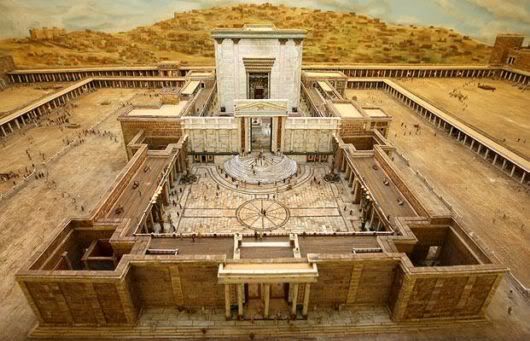
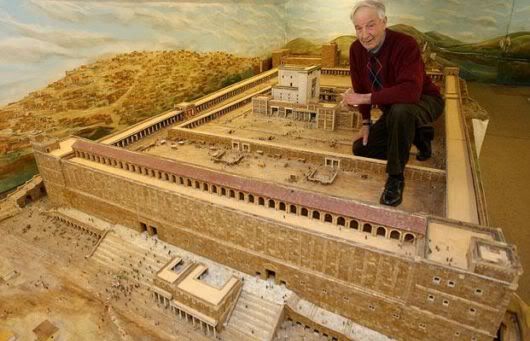
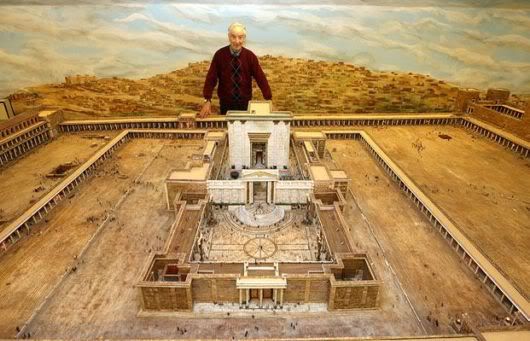
A retired farmer has spent more than 30 years building an enormous scale model of a Biblical temple.

Alec Gerrard has spent 30 years constructing the ancient Herod's Temple

Photo: GEOFF ROBINSON

In Pictures: Model of Herod's Temple

All Pictures by: Geoff Robinson Photography

Farmer Builds Model of Biblical Temple


Now, here's a model of biblical proportions. A retired farmer has spent more than 30 years building an enormous scale model of Herod's temple - and it is still not finished

Farmer Builds Model of Biblical Temple


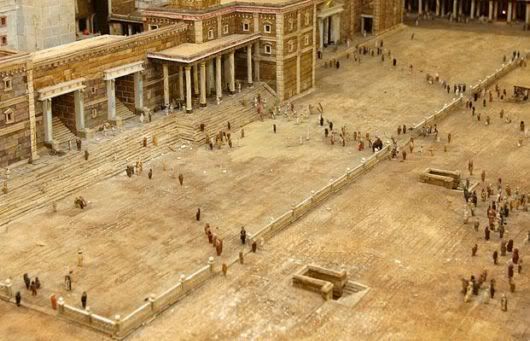
Alec Garrard, 78, has dedicated a massive 33,000 hours to constructing the ancient temple, which measures a whopping 20ft by 12ft

Farmer Builds Model of Biblical Temple


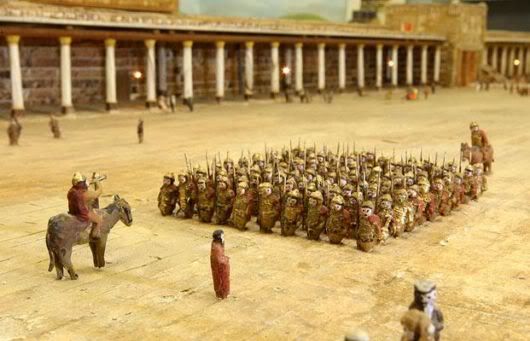
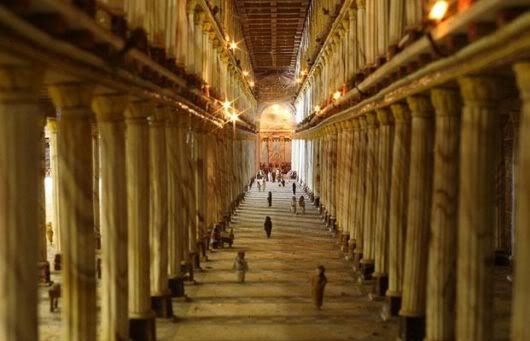
The pensioner has hand-baked and painted every clay brick and tile and even sculpted 4,000 tiny human figures to populate the courtyards

Farmer Builds Model of Biblical Temple


But Mr Garrard, who started the epic project in his 40s, says his masterpiece will not be finished in his lifetime

Farmer Builds Model of Biblical Temple


"I have an interest in buildings and religion so I thought maybe I could combine the two and I came up with the idea of doing the temple"

Farmer Builds Model of Biblical Temple


"I'd seen one or two examples of it in Biblical exhibitions, but I thought they were rubbish and I knew I could do better"

Farmer Builds Model of Biblical Temple


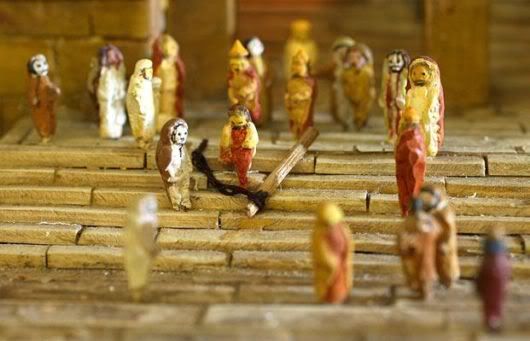
"I have also sculpted and painted 4,000 figures, measuring just half an inch and all wearing their correct costumes"

Farmer Builds Model of Biblical Temple

"Each one takes about three hours to make and there are 32 versions of Jesus, although no one can ever spot him no matter how religious they are"

Farmer Builds Model of Biblical Temple


Visitors come from all over the world to see the model and Mr Garrard provides binoculars so they can see all the details

Farmer Builds Model of Biblical Temple


"I personally know all the top archaeologists from Jerusalem and I've had experts from the British Museum visit," he says

Farmer Builds Model of Biblical Temple


But he chases the money-changers out of the temple: "I've had a lot of offers from people to buy it, but it's not for sale"

Farmer Builds Model of Biblical Temple


He says his wife Kathleen thinks he is mad

Farmer
 Builds Model of Biblical Temple

He adds: "She wishes she'd married a normal person"

Farmer Builds Model of Biblical Temple


Mr Garrard, from Norfolk , spent more than three years researching the temple, which was destroyed by the Romans 2,000 years ago and deemed to be one of the most remarkable buildings of ancient times

Farmer Builds Model of Biblical Temple


He then started to construct the amazing 1:100 scale model, which is now housed in a huge building in his back garden

Farmer Builds Model of Biblical Temple


"Everything is made by hand. I cut plywood frames for the walls and buildings and all the clay bricks and tiles were baked in the oven then stuck together," he says

Farmer Builds Model of Biblical Temple


Built in 19BC by King Herod the Great, the temple was flattened in AD70, just six years after completion

Farmer Builds Model of Biblical Temple


In its heyday the temple complex covered 36 acres - four times the area of Windsor Castle

Farmer Builds Model of Biblical Temple

The Temple was probably located on the site of what today is the Dome of the Rock.

Duplex House for Make It Right / GRAFT

Duplex House for Make It Right / GRAFT

ne_street

GRAFT was one of the first practices that started working with Make It Right to redevelop the Lower 9th Ward area in New Orleans. Their single family home design has been picked by 3 homeowners so far, with 2 already finished and 1 in construction phase.
GRAFT’s proposal for the new set of duplex homes we featured yesterday, has LEED Platinum certification and in my opinion proposes an interesting strategy to connect with the street level, mandatory to all MIR projects.
Architect’s description and more images after the break:
After the success of the first round of designs for the Lower Ninth Ward a new group of architects was invited to design dwellings. GRAFT donated another design, this time with a larger building for up to two families. The Round 2 house deploys a similar formal strategy of blending as does GRAFT’s Round 1 shotgun house. A strong visual connection to the Round 1 house was maintained in order to bring consistency of character to the New Orleans’ Lower Ninth Ward, which will continue to be populated by these types of dwellings. Here, we have additionally drawn inspiration from the camelback shotgun typology. Historically, camelbacks emerged as a way for residents to add a partial second story to a residence, whether simply to gain more space for a single-family home or to add a rental unit at the rear of a structure. In our design, we utilize the camelback strategy to stack a second efficiency unit above a first floor shotgun house.

nw_backyard

A critical programmatic goal within the design is to establish a strong connection between the private interior zone of the house and the shared public space of the street. The primary challenge in achieving this goal lies in negotiating the 8’-0” first floor height that is required to make the houses safer from future flooding of the street level. The broad and spacious deck located in the front yard mediates the relationship between public and private by raising the deck 5’-0” above grade. This offers a welcoming gesture to the street while at the same time creating a semi-private space for the inhabitants of the house to enjoy.

section

section

Residents may enter the house from the side porch landing, leading them into a large open space, containing living, dining and kitchen functions. The lower unit has a flexible three bedroom layout that can be converted into a two bedroom and office layout if desired. The master suite at the rear of the house contains an en-suite bathroom that shares a common wet wall with the unit’s other bathroom and kitchen making a cost-efficient plumbing core.

ne_above

An exterior stair carries the inhabitants of the efficiency unit up to a rooftop terrace entry deck. This secondary deck level may be utilized as a private deck for the upper dwelling. It provides a generous outdoor living space, views of the neighborhood, space for a small vegetable or herb garden, and easy access to the solar panel array for maintenance. The upper unit itself is designed to be a simple one bedroom dwelling with a living room and dining area facing the backyard. Here the efficiency kitchen shares a wall with the bath to form a cost-efficient plumbing core. The kitchen forms an ‘L’ at the perimeter of the living and dining area in order to create an open and inviting space.


Xixi Wetland Art Museum / Studio Pei-Zhu

Xixi Wetland Art Museum / Studio Pei-Zhu

by Studio Pei-Zhu

Chinese Studio Pei-Zhu has designed the Xixi Wetland Art Museum located in a rural nature preserved near Hangzhou, China. The concept stems from the interaction between building and nature. As leaves fall from trees they arrive naturally on the ground. The resulting form creates shelter against the earth.
This design creates the genuine qualities of scattered, fallen leaves and shelter through five buildings. Some leaves overlap and attach with other leaves. One leaf remains separate, yet still unites in visual language with the linked leaves. The four linked structures house functions for business, recreation, a hotel, restaurant, and reception. The single standing leaf is the art museum.
The buildings are covered by light colored, reflective zinc panels that have a brushed finish, resulting in a diffused and soft reflection of their interactions with people and nature. this blending influences a person as they experience the museum. All colors, light, and details merge into a continuous representation that is not recognizable as individual objects, but are distinguished as a uniform and natural image.

Seen at designboom. More images after the break.


Polish Pavilion / WWA Architects

 Polish Pavilion / WWA Architects

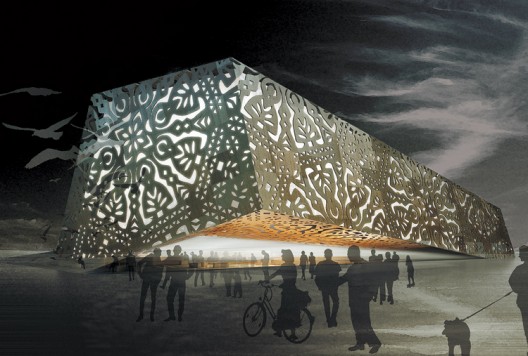
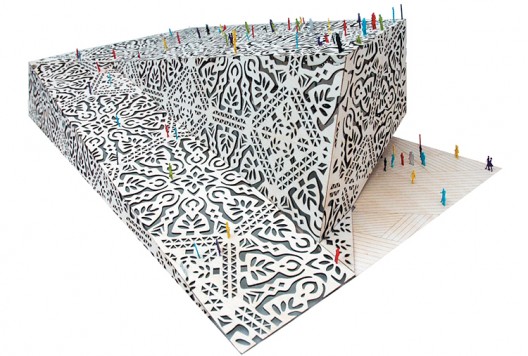
WWA Architects have created a conceptual design for Polish Expo 2010.  With the exhibition housing pavilions from countries all over the world, each pavilion must provide a strong aesthetic message to attract visitors and then provide insight to the country. WWA’s pavilion creates a distinct stylistic motif taken from the folk-art paper cut-out to create a “memorable cultural ideogram”.   The intention was for “the structure décor to draw on and make reference to tradition, but ultimately to be that tradition’s contemporary reinterpretation, a creative extension into the present day by way of inspiration rather than replication,” explained the architects.
More images and more about the pavilion after the break.

Striving to make the design more than a literal interpretation of the folklore patterning, the architects seek to use the design in “a purely architectural dimension”  to create an attractive space aesthetically as well as functionally. The slanting planes of the structure create “a geometrically intriguing and flexible space that can be creatively apportioned, by inner divisions, to different exhibition, performance and utility functions and uses.”

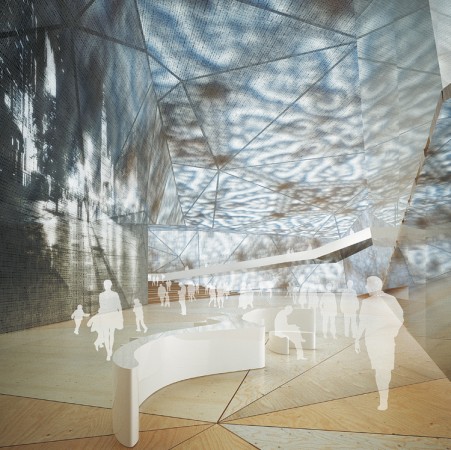
The pavilion creates a route for the visitors to follow, which outlines a logical progression through the space.  The path first circulates around the information center before leading to the full-height exhibition space.  This main area, with light filtering through the cut-out patterns of the elevation, consists of solid walls that function as screens.  The screens project images of Polish city life and provide the backdrop for cultural performances in an effort to place the viewer in the appropriate setting.
The route continues to flow through the pavilion, leading up a terraced viewing platform and eventually to the roof level, known as the “viewing spot.”  The slanted roof provides an area for outdoor performances as well as prime seating for viewing the whole exhibition.

Wood is the main construction and finishing element while the outer layer of the elevation is made of impregnated laser-cut plywood mounted on glued wood construction modules with flitch plates. Panel wall elements made of glass, polycarbonate, hydro or UV resistant materials are mounted on the outer side of the modules. On the inner side, semi-transparent PCV or Tyvek type material membranes will be additionally mounted, on which the patterns of the outer elevation will be projected.


Vaeksthuset Botanical Garden / Cebra

Vaeksthuset Botanical Garden / Cebra

Cebra, a Danish architecture firm, will design a botanical garden for Aarhus University, Denmark’s second oldest and second largest university (after the University of Copenhagen).  The botanical garden and greenhouse design will bring greenery to the campus by providing 29,600 sq feet of an expansive area of flora and fauna.. The project was designed for a building competition that required the restoration of existing buildings and the creation of one new building.
More about the design after the break.

Entitled the “Vaeksthuset,” the botanical garden creates an attractive space for students meandering around the campus. The interior features round pods that are inspired by natural forms.  A facilities complex branches off the gardens to provide office space and cafés.

The third component of the project, an outdoor garden, will be partially covered and connects to the greenhouse under a long glass corridor.  In the greenhouse, the largest dome is covered with a glass roof, allowing natural light to nurture the plants.
With this design, Cebra aims to make nature an integral part of the campus and create a new atmosphere for the students to experience on a daily basis.
As seen on designboom.

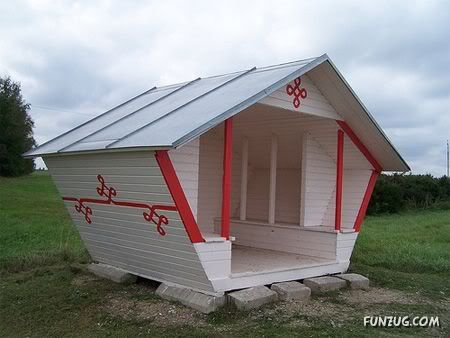
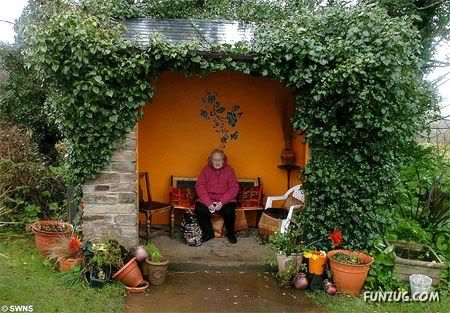
This increible bus stop was designed by Dennis Oppenheim in Ventura California

This increible bus stop was designed by Dennis Oppenheim in Ventura California

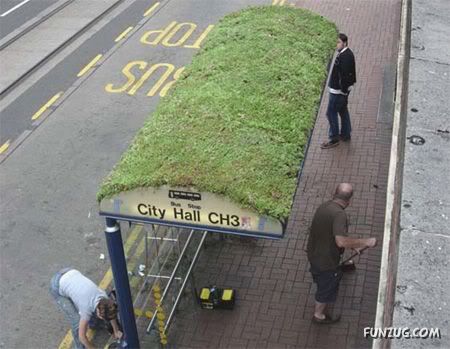
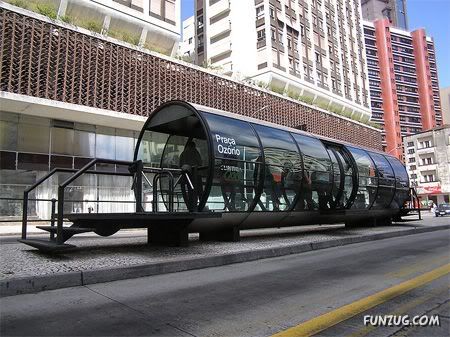
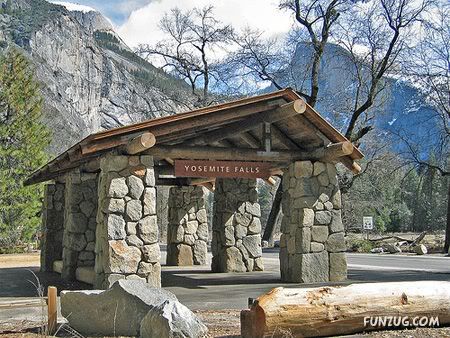
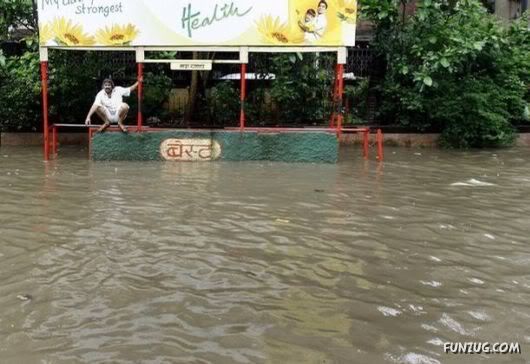
Cool Bus Stops around the World


This bus stop allows skaters to go on a mini ramp attached to a bus stop,

Cool Bus Stops around the World


It's a Quiksilver ad Swing on a Bus Stop in London, part of Bruno Taylor's "Playful Spaces"

Cool Bus Stops around the World


Art project

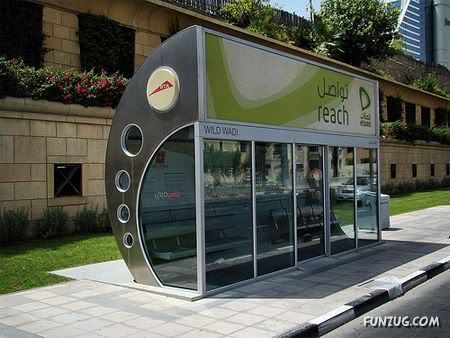
Air-conditioned bus stop, presumably near Burj Al Arab hotel in Dubai

Cool Bus Stops around the World


The Simpsons Bus stop in Germany, The caption says "Use Only In Case of Sith"

Cool Bus Stops around the World


Advertising for the movie This
Star Wars "faux light saber" bus stop ad lights up at night.

Cool
 Bus Stops around the World


Soviet era bus stop

Cool Bus Stops around the World


This living room bus stop was created by Ikea as marketing for the Design Week 2006

Cool Bus Stops around the World


Australia Post Bus Stop Advertisement

Cool Bus Stops around the World


3M was so sure their Security Glass was unbreakable,

they put a large stack of cash behind it and shoved it in a bus stop.

Cool Bus Stops around the World


Cool Bus Stops around the
 World


Cool Bus Stops around the World


Cool Bus Stops around the World


Cool Bus Stops around the World


Cool Bus Stops around the World


Cool Bus Stops around the World


Cool Bus Stops around the World


Cool Bus Stops around the World


Cool Bus Stops around the World


Cool Bus Stops around the World


Cool Bus Stops around the World


Cool Bus Stops around the World


Cool Bus Stops around the World


Cool Bus Stops around the World


Cool Bus Stops around the World


Platoon Kunsthalle / Graft Architects

Platoon Kunsthalle / Graft Architects

Architects: Platoon Cultural Development + Graft Architects
Location: Seoul, Korea
Program: Exhibitions, Bar & Restaurant, Event Hall, Artist Studios, Library Lounge, Office Studios, Workshop Room, Roof Top Bar
Structure: M. Cabestany
Footprint Area: 415 sqm
Main hall Area: 272 sqm
Project year: 2008-2009
Photographs: Platoon
 
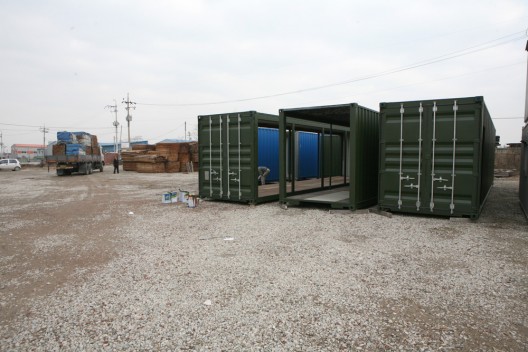
construction process
 
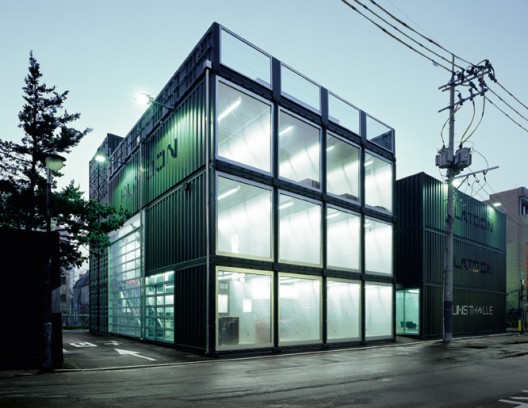
PLATOON KUNSTHALLE opened its doors on 11th april 2009. PLATOON KUNSTHALLE is set up in seoul as a space for subculture in Asia. its programmatic orientation towards cultural movements beneath the radar creates a dynamic space where new ideas are born and presented.
The platoon Europe headquarters in berlin was established in 2000. it runs diverse culture and communication projects in cooperation with an international community of 3,500 creatives from all different professions.

first floor plan

PLATOON KUNSTHALLE is not about entertainment. The program will provide a communication platform for anybody interested in subcultural creative fields like street art, graphic design, fashion, video art, programming, music, club culture, political activism etc.
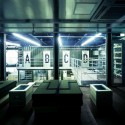
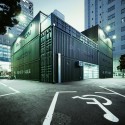
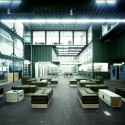
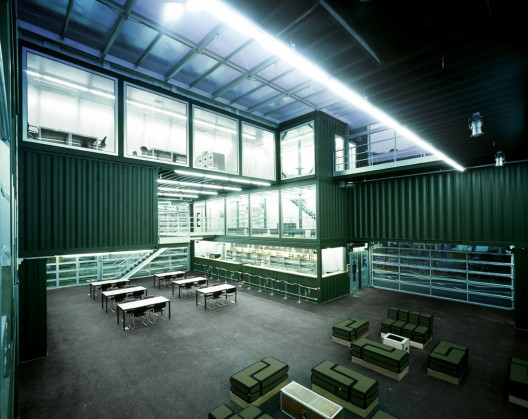
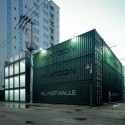
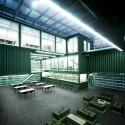
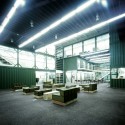
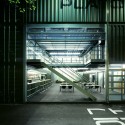
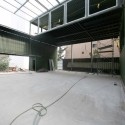
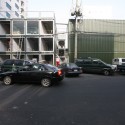
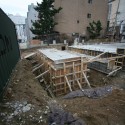
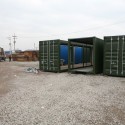
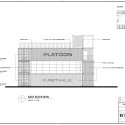
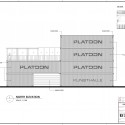
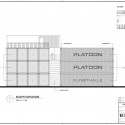
PLATOON KUNSTHALLE is built of 28 iso cargo containers. As icons of a flexible architecture in a globalized culture, the stacked containers form a unique construction that can be rebuilt anywhere else any time.

construction process

As PLATOON KUNSTHALLE is located in the upscale cheongdam area the confrontation of subculture with the close-by design houses, commercial galleries and luxury brand stores creates a tension and interaction between the two worlds.
PLATOON KUNSTHALLE provides showcases of underground artists, studio residencies and a fine selection of cutting-edge stage performances to introduce the energetic potential of subculture in Korea and Asia.

Subculture at PLATOON KUNSTHALLE is presented in different formats like exhibitions, movie nights, concerts and multimedia performances, workshops, discussion panels and special events. the four scholarship programs give young upcoming artists from Korea and abroad the opportunity to develop creative projects at the PLATOON KUNSTHALLE. the four showcases present every month striking works from the subculture and streetart field including leading artists of the international urban art scene.

                                     construction process      construction process      construction process


Benetton Competition / Scheurwater + Hoven

Benetton Competition / Scheurwater + Hoven

In addition to the Benetton competition providing participants with the possibility to redefine the influence of retail in an urban landscape, the competition also provided participants with the choice to design “Building A” or “Building B”.  While we shared some of the winning proposals for Building A (Grzegorz Witold Woronowicz and Giuseppe Iodice), we now share Maarten Scheurwater and Oliver van den Hoven’s proposal for Building B, which placed second in the competition.
More about the winning proposal after the break.
The competition is interesting because although the two buildings are independent, with their locations about 800 meters apart, their programmatic requirements and square footage are identical.  As with Building A, the competition clearly expressed the need for the 12 level building to be formatted in this manner: the underground levels must provide parking and storage space; the ground and first floor (1200 m² each) must be subdivided into 3 commercial units, the second to fourth floor (900 m² each) are designate for office space; the fifth and sixth floors (675 m² each) are for office facilities; and the seventh floor (675 m²) will be apartments.

“The Benetton competition brings together two seemingly conflicting domains: the dynamic world of fashion on the one hand and the static domain of architecture on the other. The central objective of this project is to design a timeless building for an industry that creates new collections and appearances every season,” explained Scheurwater.
For Scheurwater’s proposal, a projected volume roughly covering the entire site is split into two parts: a cube and a thin slab.  The void adds an intimate shopping experience for those passing by to become attracted to the entrance area marked by the two split forms.   This small space creates a welcoming environment to combat the massive form.  ”The programme in the competition brief implies a thinning from the base upwards. This thinning is purposely internalized in this project by means of a large void that gets larger towards the higher levels,” explained the architect.  By keeping the thinning effect internal, the structure maintains it massive silhouette throughout the levels.

Most of the facade features a curtain wall design with 4mm thin slabs of local Persian marble mounted on the outer glass panel of the curtain wall.   The facade creates a translucent feel as light and shadows glow through the marble to highlight the openness and lightness of the interior.  The facade does not only create an interesting environment at the street level, but also carries those same properties through its higher levels.  The filtered light “renders the beautiful textures in the marble and brings calm and character…to this inner world”.  As the light intensity changes throughout the day, so to does the appearance of the facade.  During the night time, the light from the office spaces, shops and apartments filters through the facade in different directions to light the structure “like a lantern that can be distinguished from as far as the elevated highway and further to the South.”

Scheurwater van den Hoven Architecten
Maarten Scheurwater
Olivier van den Hoven

First stone of the Spiral Tower by Zaha Hadid in Barcelona

First stone of the Spiral Tower by Zaha Hadid in Barcelona

4-copy

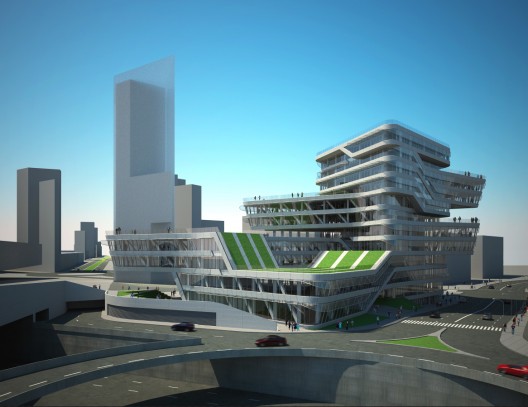
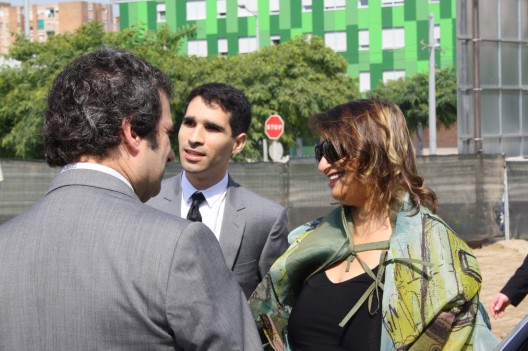
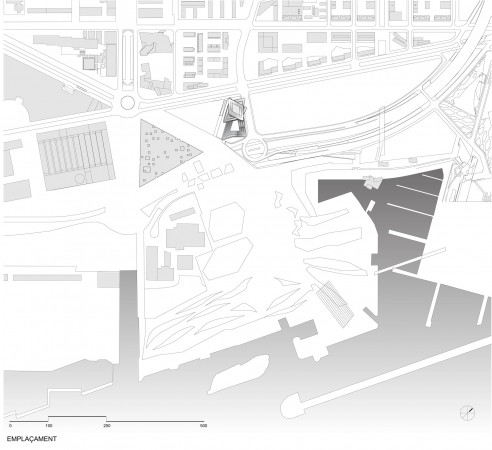
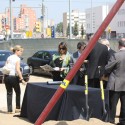
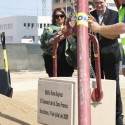
Today at 11.00 AM took place the laying of the foundation stone of what will be the new iconic building in the area of Barcelona’s Forum, the Spiral Tower. This university campus will be located at the end of Avenida Diagonal, one of the main avenues of Barcelona, beside the Forum building designed by Herzog & de Meuron for the Forum of Cultures held in 2004.
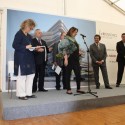
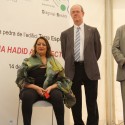
Zaha Hadid came around 11:15 and the event had an intense political presence (the Mayor of Barcelona Jordi Hereu, mayors from areas like Maresme and Besós and key representatives of the Consorsi). The building, located at the confluence of streets Taulat and Sant Ramon de Penyafort, will have a ground surface of 20,650 sqm.

img_1366

Hadid’s speech was short, she recalled his first trip to Spain when she was 7 years and then she talked about a competition in which she participated 20 years ago, related to the design and extension of the Diagonal Avenue. At that moment she had the opportunity for a better understanding about the urban development of Barcelona and [as she said there] it has been a big influence on the design of the Spiral Tower.

2-copy

Design and Context

Zaha Hadid’s design for the Edifci Campus confrms the role of the 22@ area at the very forefront of Barcelona’s changing water edge. The tower’s striking design creates a new presence in a territory of transition. The spiralling tower stitches the border of the municipalities of Barcelona and Besòs, creating a new infrastructure that is a joint venture of the two cities and two clients: El Consorci, Zona Franca de Barcelona y b-TEC, Consorci del Campus Interuniversitari del Besòs.
The design articulates the transition between the forum and the campus, between the new equipments and parks water-front area, in Barcelona, and the requalifcation of the delta of the river Besòs area, in Sant Adriá del Besòs. The formal theme of the spiral actively binds the two together with an encompassing movement, stimulating the seamless integration of the city fabric, connecting in a dynamic way, the different surrounding areas.

situation plan

situation plan

Synergies and Opportunities

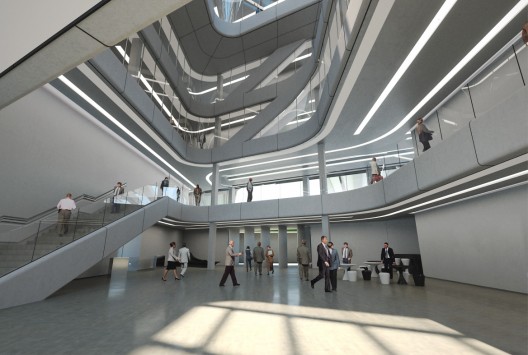
The new node created at the Edifci Campus anchors itself on the functional mix of university and office spaces, establishing a bridge between the world’s of education, research and business, promoting new opportunities of interaction between the diverse types of users through its new public spaces, the courtyard and the atrium. Our design proposal takes on the challenge of combining the needs and aspirations of the two clients and creating a symbiosis between their programmes. Thinking of the two briefs as one single building is the most coherent, effcient, sustainable and cost effective way to fulfl the potential of this great opportunity. This new building form, defned as a combined entity created by fusion, will set a new typology of intervention within the Knowledge City concept. The critical mass generated at the site will act as a catalyst on the transition between the forum and the campus, creating potential new synergies between the different stake holders and contributing actively to the overall redevelopment of the 22@ area.

img_1352

5-copy

Connectivity and Public Space

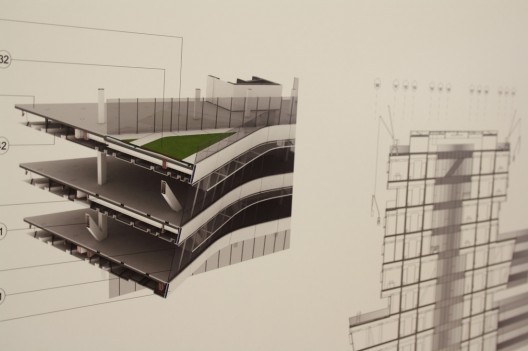
The fluid character of the tower is generated through an intrinsically dynamic composition of volumes that dissolves the classic typology of the tower and the podium into a seamless piece. The building uses the site’s inclined topography to redesign the landscape in order to create seamless accessibility between the new campus and the forum. Through the use of cantilevers, the building lifts from the street level, releasing the ground to be occupied by civic / public uses. The continuous, ‘choreographed’, spiral movement ‘weaves’ a series of public spaces, connecting the campus, through the courtyards and under the cantilevers, to the forum beyond.

Credits

Architect: Zaha Hadid Architects and Patrik Schumacher
Location: Barcelona, Spain
Project Director: Tiago Correia
Project Architects: Alejandro Diaz & Aurora Santana
Project team: Fabiano Continanza, Víctor Orive, Rafael González, Oihane Santiuste, Mónica Bartolomé, Raquel Gallego, Esther Rivas, Jessica Knobloch, Hooman Talebi, Maria Araya, Ebru Simsek
Local Architect: Ferran Pelegrina Associats SL [Barcelona, E]
Technical Architect: J/T Ardèvol i Associats SL [Barcelona, E]
Structural Engineering: BOMA Brufau, Obiol, Moya & Ass. SL [Barcelona, E]
Structural Engineering: Adams Kara Taylor [London, GB] (Concept Stage)
M/E/P Engineering: Grupo JG. SL [Barcelona, E]
M/E/P Engineering: Max Fordham LLP [London, GB] (Concept Stage)
Facade Engineering: Ferrés Arquitectos y Consultores. SL [Barcelona, E]
Lighting Design: Architectural Lighting Solutions [Pamplona, E]
Health & Safety: J/T Ardèvol i Associats SL [Barcelona, E]
QS / Cost: J/T Ardèvol i Associats SL [Barcelona, E]
Geotecnia: Losan [Barcelona, E]
Project Area: 27,650 sqm
Project Year: 2006-2011


Cloud Tower by the next ENTERprise - architects

Cloud Tower by the next ENTERprise - architects

cloud-tower-by-the-next-enterprise-architects-17.jpg

Cloud Tower is a pavilion for open-air concerts in the grounds of a castle near Vienna, Austria, designed by the next ENTERprise - architects.

cloud-tower-by-the-next-enterprise-architects-16.jpg

Located at Grafenegg Castle along with the copper-clad concert hall in our previous story, the auditorium occupies an existing depression in the landscape, accentuated by further excavations.

cloud-tower-by-the-next-enterprise-architects-18.jpg

Visitors enter the auditorium through a corridor cut into the small hill created with the displaced earth

cloud-tower-by-the-next-enterprise-architects-8.jpg

The auditorium has 1,670 seats with a further 300 on the lawn, while the stage can accommodate an orchestra withup to 200 performers.

cloud-tower-by-the-next-enterprise-architects-1.jpg

The 23 metre tall, steel stage-roof is made of steel and glass, reflecting the surrounding sky and trees.

cloud-tower-by-the-next-enterprise-architects-2.jpg

Photographs are by Lukas Schaller.

cloud-tower-by-the-next-enterprise-architects-14.jpg

Here’s some more information from the architects:
Project title: Wolkenturm – Freiluftbühne & Schlosspark Grafenegg / Cloud Tower – Open-air pavilion Grafenegg
the next ENTERprise - architects
Land in Sicht – landscaping
The castle grounds of Grafenegg are almost 250 years old. Every period has left its traces, and this stylistic variety is one of the reasons for the park’s appeal. The area, with the castle and moat at its centre, has a size of approx. 31 ha. The park and its dendrological collection are open year round and are accessible from two main entrances on the west and east side.

cloud-tower-by-the-next-enterprise-architects-4.jpg

The open-air pavilion in the park is used as a stage during festival season in summer, and as a attraction for excursionists and flaneurs – similar to the gazebos in historical landscape gardens, which were designed as a destination or a stop-over on extended walks.

cloud-tower-by-the-next-enterprise-architects-5.jpg

The pavilion is part of a relational field, recontextualizing the existing elements of the ensemble: the ‘new’ entrance, the riding school, the castle, the ‘Black Gate’ and the ‘Große Senke’ (lit. transl.: large depression). With great ease the pavilion inserts itself into the landscape and, through its topographical configuration, reinterprets formal elements of the landscape garden – the play with perspective and visual relations, with contraction and expansion, with enclosure and opening.

cloud-tower-by-the-next-enterprise-architects-6.jpg

The “Schneise” (loosely translated: an incision in the landscape) creates a vista linking the riding school to the Black Gate, and serves as an entrance to and a passage through the auditorium area. The staging of views and spatial sequences, the framing and hiding of points of attraction, often achieved by the meandering layout of paths in the traditional landscape garden, is a theme taken up by varying the elevation of the incision to achieve this effects. Coming from the castle, the visitor is enticed to proceed by the silhouette of the “cloud tower”, visible behind the artificial mound. Immersing himself into the incision, he tunnels through the hill and – after passing this deep narrow – enters the wide arena of the auditorium and the stage, the ‘cloud tower’ of the stage roof suspended above it.

cloud-tower-by-the-next-enterprise-architects-7.jpg

The basic rule of acoustics for open-air stages, ‘what you see is what you hear’ serves as a cue to explore affinities between perspective and acoustic space. The topography of the existing depression – the “Große Senke” – is amplified by modeling the terrain. Artificial hillocks are created by further excavating the depression and subsequently redistributing the soil at its perimeter. Clearly distinguished from the natural terrain by their geometry, stage and auditorium nonetheless merge fluidly with the topography of the site.
cloud-tower-by-the-next-enterprise-architects-15.gif
The stage roof is designed as an autonomous, sculptured object. Suspended above the landscape on a level with the tree canopies it is placed among the groups of trees as if it were one more of them. The shiny metal surface on the outside reflects the sky and the trees, turning into a cloud-tower.

cloud-tower-by-the-next-enterprise-architects-10.gif

landscaping: Land in Sicht, Dipl. Ing. Thomas Proksch
structural engineering: Bergmeister und Partner, Dipl. Ing. Josef Taferner
acoustics: Müller-BBM, Dipl.-Ing. (FH) M. Wahl
cloud-tower-by-the-next-enterprise-architects-11.gif
basic data
address: Grafenegg 10, A-3485 Grafenegg
country: Austria
client: Grafenegg Kultur Betriebsges. m.b.H., St. Pölten, A
architect: the next ENTERprise – e.j.fuchs | mth.harnoncourt
type: music pavilion
additional information
resident orchestra: Tonkünstler-Orcheste r Niederösterreich
artistic director Grafenegg International Music Festival: Rudolf Buchbinder

cloud-tower-by-the-next-enterprise-architects-12.gif

calendar
competition: Feburary 2005
planning phase since: August 2005
under construction since: July 2006
completed in: June 2007
team
Paul Vabitsch, Egon Niedertscheider, Hannes Oswald, Maja Ozvaldic, Marianna Milioni, Daniel Harrer, Waltraud Hoheneder, Claudia Cavallar
overall planning: ARGE the next ENTERprise | Land in Sicht
architect: the next ENTERprise – e.j.fuchs | mth.harnoncourt
landscaping: Land in Sicht, Thomas Proksch, Wien / Vienna
structural engineering: Ingenieurteam GmbH Bergmeister, Josef Taferner, Jochen Ehmann, Vahrn / Varna, I
acoustics: Müller-BBM GmbH, Prof. Karlheinz Müller, München / Munich, D
light design: Ploderer & Partner, Christian Ploderer, Wien / Vienna
light planning: Wiltschko Lichtplanung, Berndorf, A
calculation: sglw architekten, Werner Silbermayr, Wien / Vienna
reinforced concrete materials consulting
Ingenieurbüro Prof. Schießl, Christian Sodeikat, München / Munich, D.

cloud-tower-by-the-next-enterprise-architects-9.gif

project management: NÖ Hypo Bauplanungs- und Bauträgergesellschaf t m.b.H.., Johannes Reiterlehner, St. Pölten
controlling: Azberger-Höss ZT GmbH, St. Pölten
Fachplaner
construction supervision: BM Horst Pratter, Judendorf-Straßengel
supervision landscaping: Land in Sicht, Andreas Beneš
building physics: Wolfgang Hebenstreit, Wien / Vienna
geological survey: Mario J. Pototschnik, Wien / Vienna
site survey: Gerhard Senftner, St. Pölten
HKLSE-Planung: Christian Koppensteiner, Wien / Vienna
contractors
general contractor: Alpine Mayreder Bau GmbH, Zweigniederlassung NÖ, Horn
steel construction: Pagitz Metalltechnik GmbH, Wien / Vienna
prefabricated concrete: Alfred Trepka GmbH, Ober-Grafendorf
drywall: Perchtold Trockenbau GesmbH, Wiener Neudorf
Schlosserarbeiten: Heinrich Renner Ges.m.b.H., Langenlois
carpenter: Pöchlhacker Holzbau GmbH, Ybbs
glazing: Rigo-Glas GmbH, Wien / Vienna
paint: Farben Traht, Etsdorf am Kamp
electrical installation & equipment: Eichinger&Stuber, Langenlois
plumbing equipment & installation: Caliqua Gebäudetechnik GmbH, Wiener Neudorf
garden & landscape gardening: Kanovsky Gmbh, Klagenfurt

cloud-tower-by-the-next-enterprise-architects-13.gif

technical data
seats: 1.670 auditorium seats, 300 lawn seats
height of stage roof: 23 m
stage width: approx. 20 m
stage depth: approx. 11 m
maximum orchestra stength: approx. 200 artists
net floor area: 651 m²
 stage: 228 m² 
backstage area: 203 m²
 artists’ washrooms: 27 m² 
 acoustic buffer: 16 m²
 artists’ wardrobes: 35 m²  piano storage: 11 m²
 HVAC room: 15 m² audience washrooms: 115 m²
Park area: 31,5 ha
construction
Stage structure: concrete; stage roof: steel/glass; auditorium: prefabricated concrete; stage backdrop: double-layered lightweight structure.