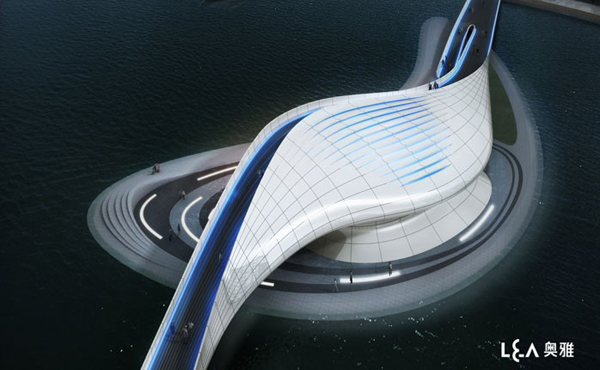
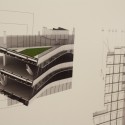
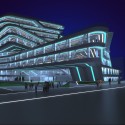
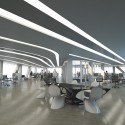
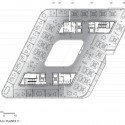
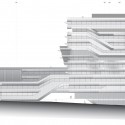
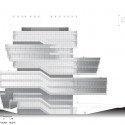
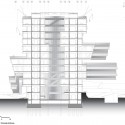
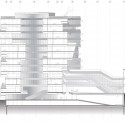
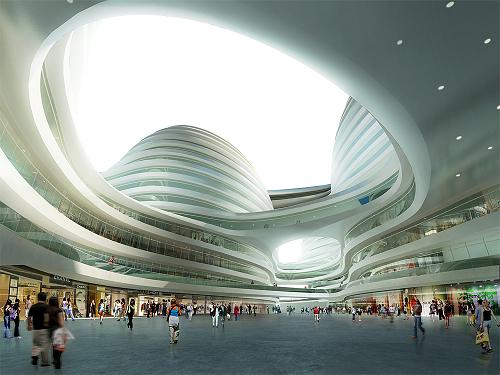
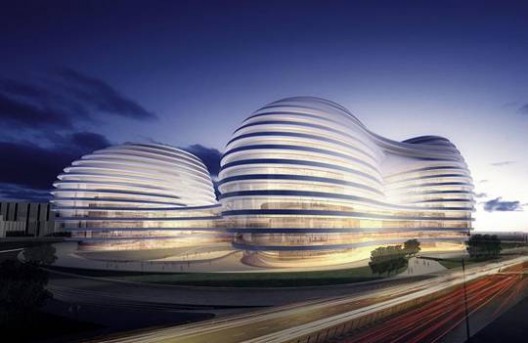
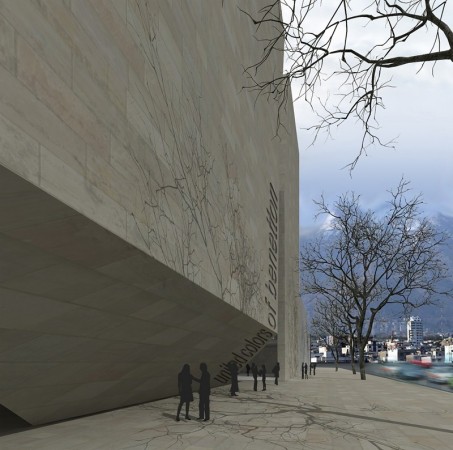
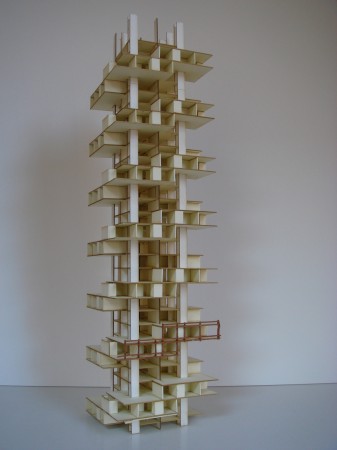
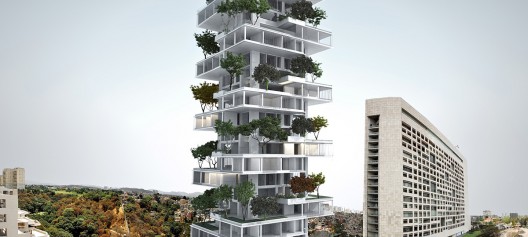
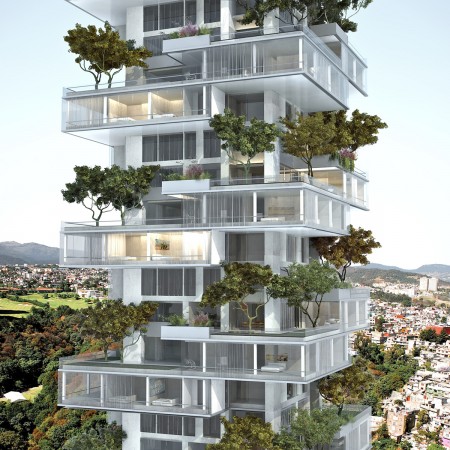
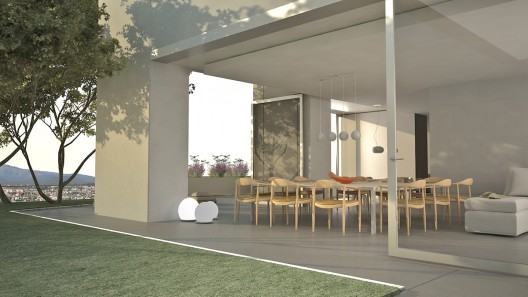
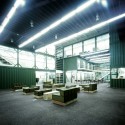
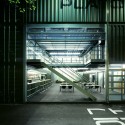
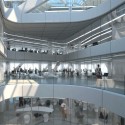
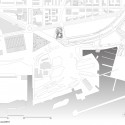
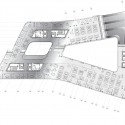
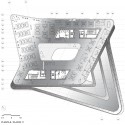
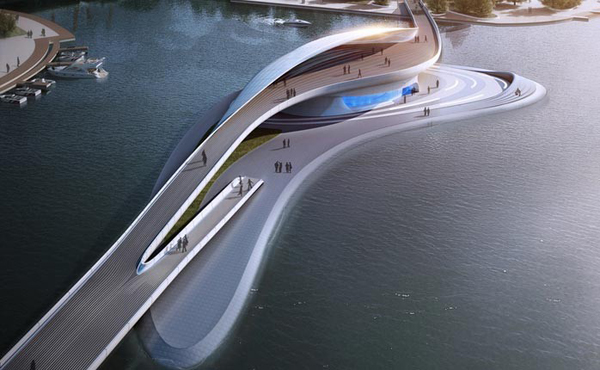
Wuxi Xidong Pedestrian Bridge / L&A Design Group

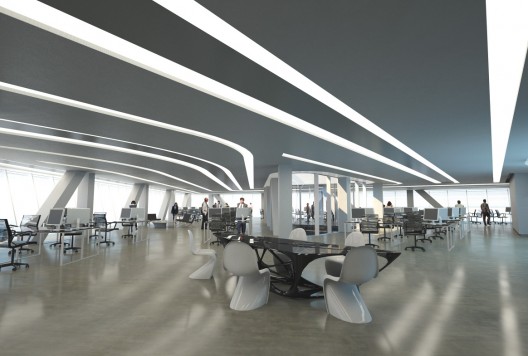
Wuxi Xidong Pedestrian Bridge / L&A Design Group


ادامه نوشته

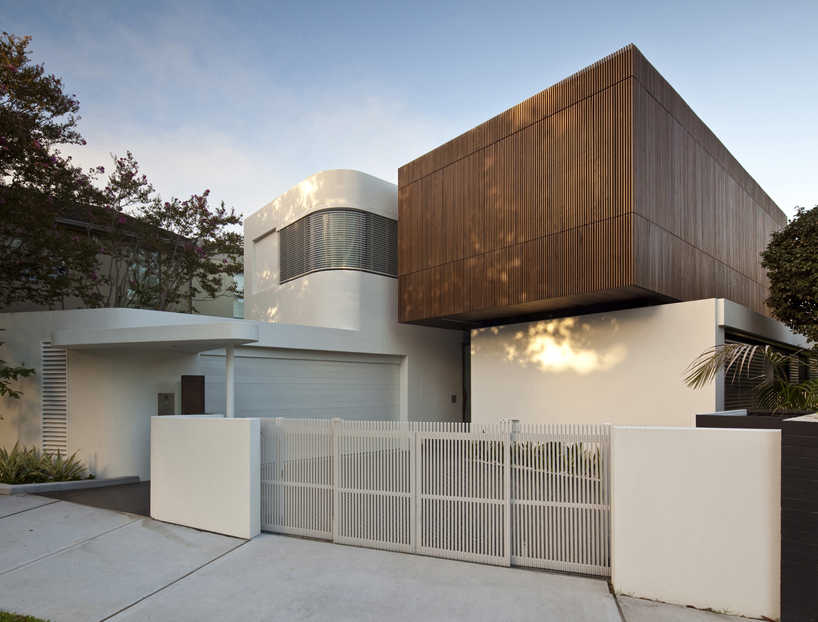
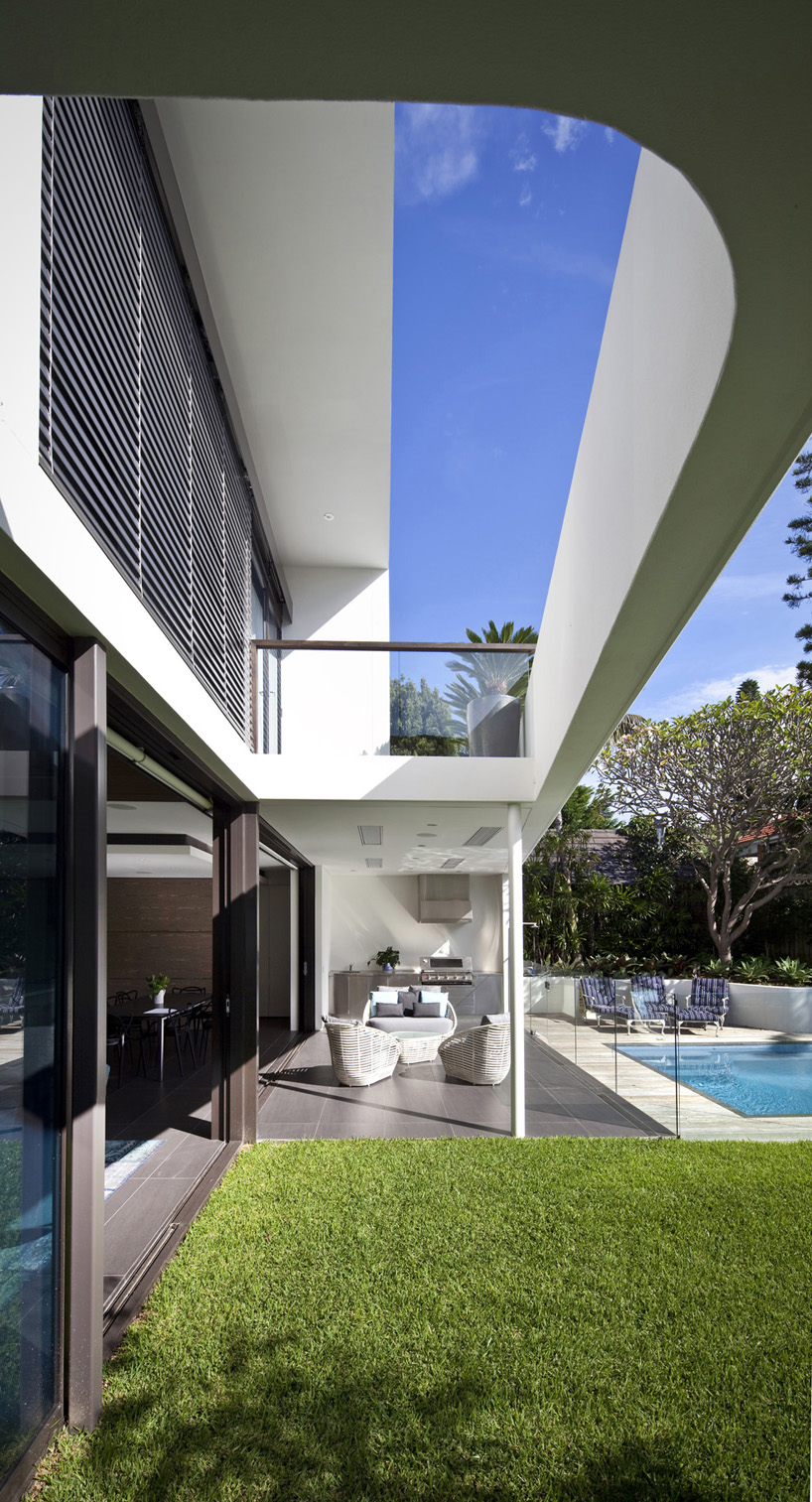
Z house by bruce stafford architects

Z house by bruce stafford architects
 
Z house by bruce stafford architects
 
 
ادامه نوشته

Zaha Hadid Wins Japan National Stadium Competition

Zaha Hadid Wins Japan National Stadium Competition

ادامه نوشته

Kaohsiung Port Terminal Proposal by Asymptote Architecture

Proposed Kaohsiung Marine Gateway Terminal by Asymptote Architecture in collaboration with Artech
 Architects 
 

Rendering

ادامه نوشته

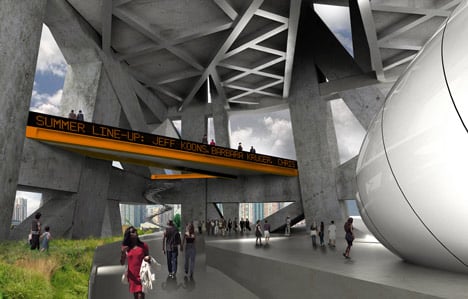
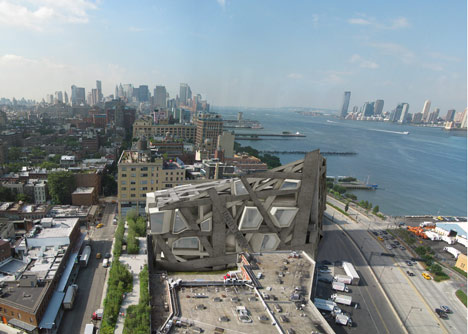
Conceptual extension to Whitney Museum  of American Art by Axis Mundi
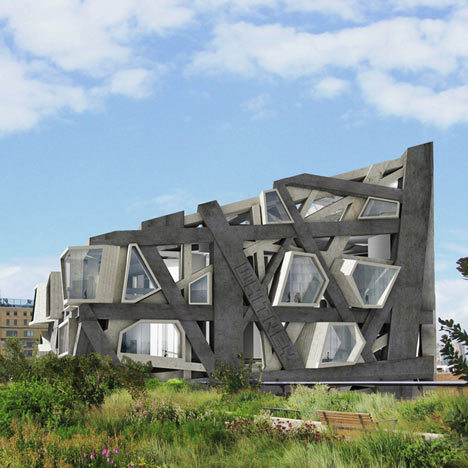
Conceptual extension to Whitney Museum  of American Art by Axis Mundi
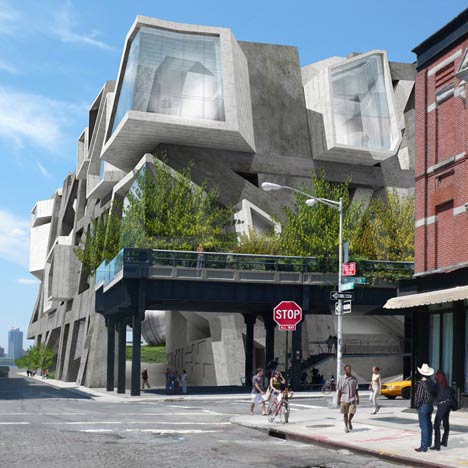
Axis Mundi Imagine a Different Whitney Downtown

Axis Mundi Imagine a Different Whitney Downtown

Axis Mundi Imagine a Different Whitney Downtown

Axis Mundi Imagine a
 Different Whitney Downtown

ادامه نوشته

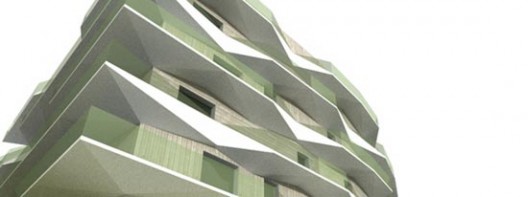
Galilée, an Amazingn FranOffice Building ice

 
Galilée, an Amazingn FranOffice Building ice
 
 
Galilée, an Amazing Office Building in France
 

Galilée, an Amazing Office Building in France

ادامه نوشته

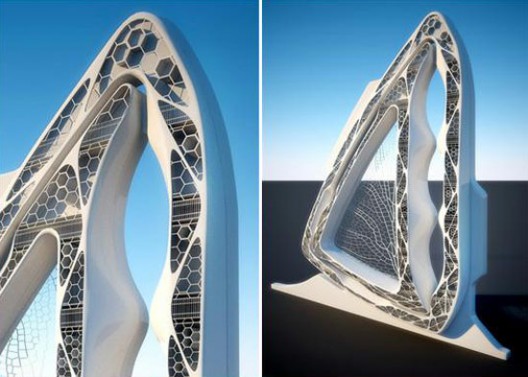
Dragonfly Vertical Farm concept by Vincent Callebaut
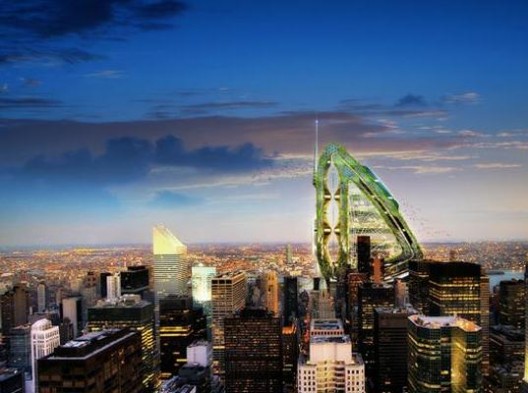
Dragonfly Vertical Farm concept by Vincent Callebaut
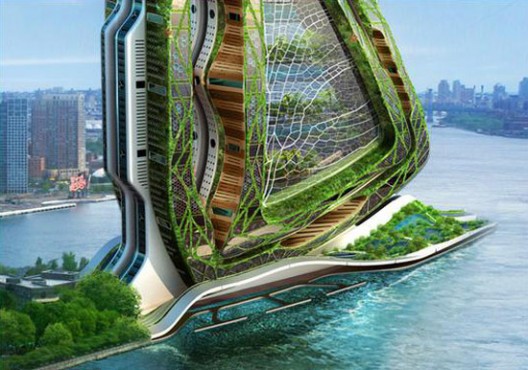
 

ادامه نوشته

Majori Primary School Sports Hall by Substance

Majori Primary School Sports Hall by Substance

majori-sports-hall-by-substance-squ-pic-04.jpg
 
 
majori-sports-hall-by-substance-pic-091.jpg
 
majori-sports-hall-by-substance-pic-09.jpg
 
ادامه نوشته

Kameha Grand Bonn interiors by Marcel Wanders

 Kameha Grand Bonn interiors by Marcel Wanders

wanders_hotel1_sq.jpg
 
wanders_hotel_5b.jpg
 
kameha_lobby-image-1.jpg
 
ادامه نوشته

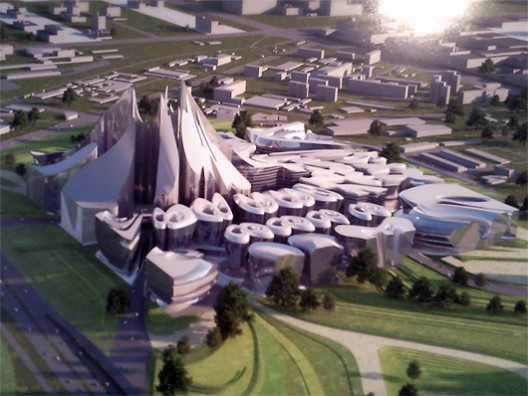
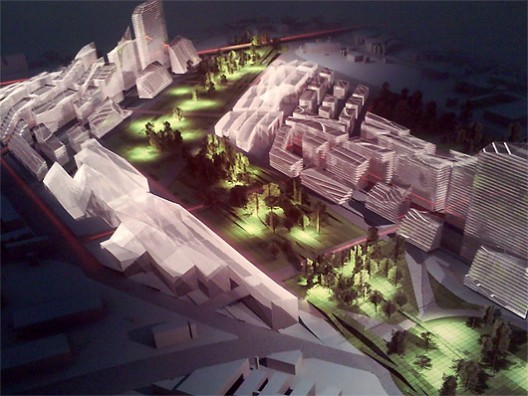
Sofia’s New City Center to be designed by Dominique Perrault

Sofia’s New City Center to be designed by Dominique Perrault

ادامه نوشته

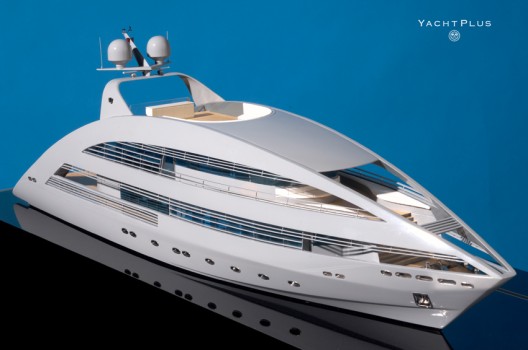
Foster + Partners designs super-yacht

Foster + Partners designs super-yacht


ادامه نوشته

Harvard University: Projects by Alumni and Students

Harvard University: Projects by Alumni and Students

ادامه نوشته

Centre Pompidou-Metz

Centre Pompidou-Metz


ادامه نوشته

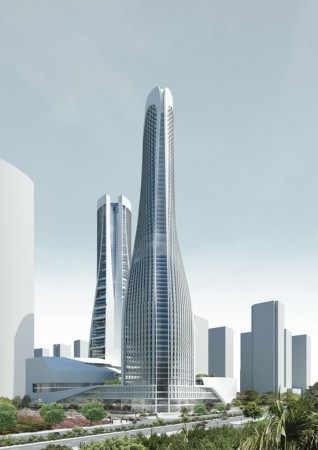
In Progress: Z Towers / NRJA

In Progress: Z Towers / NRJA


ادامه نوشته

Raffles City / UNStudio

Raffles City / UNStudio

ادامه نوشته

Diller Scofidio + Renfro win competition for the new Image  

Diller Scofidio + Renfro win competition for the new Image and Audio Museum in Rio de Janeiro

ادامه نوشته

National Tecnical Library in Prague / Projektil Architekt

National Tecnical Library in Prague / Projektil Architekt

projektil_ntk_360a

ادامه نوشته

Frank, Ettore and Toyo by Chris Labrooy

Frank, Ettore and Toyo by Chris Labrooy

dzn_frank_4.jpg

ادامه نوشته

Masdar City Centre by LAVA

 
ادامه نوشته

Villa extension by O+A

ادامه نوشته

Urban Resort San Petersburgo / WMA

Urban Resort San Petersburgo / WMA

ادامه نوشته

Automotive Showroom and Leisure Centre by Manuelle Gautrand Architecture

Automotive Showroom and Leisure Centre by Manuelle Gautrand Architecture


ادامه نوشته

Serpentine Gallery Pavilions over the years

Serpentine Gallery Pavilions over the years
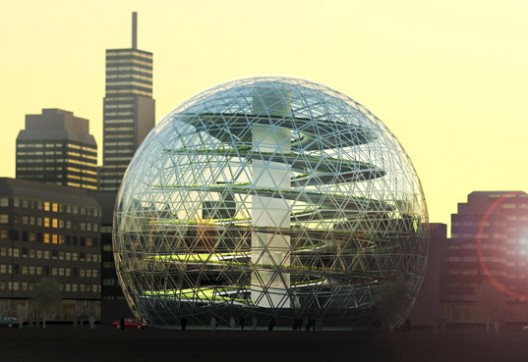
serpentine_ito_dezeen.jpg

ادامه نوشته

Plantagon’s Vertical Farm

Plantagon’s Vertical Farm

ادامه نوشته

ZAC bords de seine / ECDM Architects

ZAC bords de seine / ECDM Architects


ادامه نوشته

Monolab’s High Rise Tower

Monolab’s High Rise Tower

ادامه نوشته

ThyssenKrupp Elevator Competition / RSVP

ThyssenKrupp Elevator Competition / RSVP


Our friends from RSVP Architects just shared with us their proposal for the ThyssenKrupp Elevator competition in Za’abeel Park, Dubai.  The tower seems to morph out of the water and into the air, creating a structure that acts as a monument during the day, and an icon during the night.
More images and further project description after the break.
The architects explained, “The overall form evolves out of a seashell or oyster shape that keeps turning towards the sky as if the forces of the water and the wind had collaborated in this architectural metamorphosis, where the vertical element removes a pearl from the oyster and places it high above ground as the precious object to be contemplated and occupied, the end of a journey where one is finally able to contemplate a view of the entire city.”
Programmatically, the building is arranged with conference rooms and a children’s library in the lower sections, and the raised restaurant toward the top.  While Dubai is famous for gaining land from the ocean, here the site is flooded to create a park around a lake and an aquarium that is part of the main project circulation.
The 170m twisting tower is supported by a diagonal steel mesh.  Due to its form, the tower is viewed differently depending upon the viewers’ perspective.  During the day, the sky becomes an integral part of the facade, while at night, it is illuminated like an “impressive and dynamic lighthouse” representing Dubai’s momentum and aspirations. The panoramic elevator becomes the key element in the procession upward where the sky is constantly providing the backdrop and the wind can easily flow through the structure.


Mixed Use Tower / Moho Architects

Mixed Use Tower / Moho Architects

Spanish firm Moho Architects are currently in the schematic design phase of a mixed use tower for San Jose, Costa Rica.  The tower, whose programmatic elements will range from commercial and retail spaces to offices and hotels, aims to create a strong model of sustainability for the region that will promote eco-friendliness.
More images and more about the tower after the break.
 
The building’s form is conceived of as independent strips that begin to peel away from each other as the tower rises.  Voids are punched through the form to create viewing platforms and a space to add greenery.   The shifting of these strips allows natural light to flood the interior spaces and nurture the vegetated sky courts.
The façade’s wooden brise-soleil filters solar gain while its layered composition reduces the air-conditioning load.   Since the design allows so much light to pass through the space, the need for artificial lighting is nearly eliminated.  By providing a variety of activities in one building, the reliance on transportation is reduced dramatically since both day and night time activities reside in one area.
It is the hope that after this tower is constructed, its success will promote the notion of incorporating sustainable ideas into all structures in the area.
As seen on designboom.  Images courtesy of the studio.
General Information
Location:  Bulevar Las Américas, Sabana Norte, San José, Costa Rica.
Architecture: Moho architects.
Built surface:   28.000  sqm
Preliminary drawings: December 2008


Erika Mann Elementary School / Die Baupiloten

Erika Mann Elementary School / Die Baupiloten


Architects: Die Baupiloten
Location: Berlin, Germany
Client:
Stattbau Berlin - Stadtentwicklungsge sellschaft mbH
Project Team: Maximilian Assfalg, Ania Busiakiewicz, Andrea Ceaser, Fee Kyriakopoulos, Ansgar Schmitter, Irmtraut Schulze, Thilo Reich, Wojciech Wojakowski
Sponsors: Baustoffhandel Mammitzsch, Eternit, Eurostahl, Follenius und Martin Tischlerei, GLS Bank Bochum, Firma Transresch, Bristol Kempinski Hotelkette, Essensanbieter Luna and Ridi Leuchten
Project year: 2006-2007
Photographs:
Jan Bitter
 
 
The Baupiloten are a group of students at the Institute for Architecture within the Berlin Technical University’s Department for Planning, Construction, and the Environment. Under the leadership of architect Susanne Hofmann AA dipl, the Baupiloten conduct their studies through the realization of actual building measures. The students experience the architectural curriculum as a praxis-oriented ideal and take part in all phases of design and construction.

“The Snuffle of the Silver Dragon”

The Baupiloten create an all-day “home-away-from- home” for grade-schoolers
Following the successful modernization of the Erika-Mann Elementary School in the Utrechter Strasse 25/27 - 13347 Berlin, the Baupiloten have now designed the building’s interior for all-day use. With new seating-landscapes and worlds of recreation, the Baupiloten - together with the schoolchildren - expanded upon the concept of a comfortable learning environment to include the school’s hallways and classrooms. Until recently, the hallways of the school building (designed by Ludwig Hoffmann in 1915) embodied the sterile and authoritarian educational atmosphere of the early 20th century. In their redesign, the hallways were made to suit modern educational concepts of a “rhythmic” learning atmosphere, thereby serving the current need for communal areas of varied use.

program axo

“Form Follows Kids’ Fiction”

Working together with the Baupiloten in a series of workshops, the students created fantastical and poetic worlds, culminating in the fictive “Snuffle of the Silver Dragon”. This was a further development of the “Silver Dragon World” created in the school’s hallways in 2003. The “Snuffle of the Silver Dragon”, a veil covering the floors and ceilings of the schools 3 upper stories, functions (depending on weather conditions) as a brilliant light filter.

Children as Designers of their Worlds

Beyond the collaborative process, children should be able to form their daily environment - not only suggestively in the form of ideas, but as actual co-designers of their world. In the school’s three upper stories, a seating landscape was created in a series of openings contained within the “Snuffle of the Silver Dragon”. In these openings, the children can relax upon soft, warm materials. The landscape is composed of five modules: couches, caverns, lairs, pedestals, and tables with fold-out benches. These modules allow the children to test their bodies and find the most comfortable position in which to learn or play, without having to conform to seating norms. The children can communicate via the “Snuffle Beatle”, a total of 34 reflectors placed around the building.

The “Snuffle Garden” on the schools second story offers a series of horizontal and sloped surfaces on which the children can lay, sit, or slide. Particles such as the “Wings” and “Fireflower” float inside the “Snuffle of the Silver Dragon”. The particles are fold-out chairs and sculptures on which the children sit or retreat into - either together or on their own. Warm rays of light shine into the particles from the ceiling, covering the seats in a golden glow.
The hidden “Dragon’s Treasure” is also located on this story. The children decorate its magnetic walls with colorful mosaics that can be changed however they please. On the 3rd story, the “Snuffle of the Silver Dragon” is entangled within the Kaleidoscope. A gallery of mirrors optically dissolves the geometrical space; the walls and ceilings of the hallway are equipped with highly reflective field of metal panels, penetrated only by a collection of images composed of 270 picture frames. The children decorate the picture collection with their own creations, allowing their images to be endlessly reflected and providing for a constant change in spatial perception.

The “Chill Room”, also located on the third story, is a landscape of seating-pedestals covered with foam, tarp, and various textiles. A series of one-meter high “Petals” form a protective island around the pedestals, large enough for two to three children. These protective islands are made of wooden frames and can be individually formed by the children. Thus, the children are able to form their own environment according to their wishes through the manipulation of sound, light, and laminate.


Site One / Elenberg Fraser

Site One / Elenberg Fraser

© Tony Miller

Architects: Elenberg Fraser Architecture
Location: Melbourne, Victoria, Australia
Project Management: Baracon
Civil Engineering: Reeds Consulting
Structural Engineering: Robert Bird & Partners
Services Engineering: Norman Disney & Young
Building Surveyor: Garden Group
Fire Engineer: Umow Lai & Associates
Acoustic Engineering: Marshall Day
Wind Engineering: Mel Consultants
Environmental Engineering: ERM
Quantity Surveyors: Slattery Australia
Land Surveyor: Reeds Australia
Geotechnical Engineering: Golders Associates
Project year: 2007
Client: Pan Urban
Photographs: Tony Miller
 
© Tony Miller © Tony Miller © Tony Miller © Tony Miller
 
Built on a highly visible corner site in Melbourne’s Docklands, Site One is a six level commercial building mixing commercial office tenancies, flexible and fully serviced business facilities, and sohos (small office home office) that provide work/ live opportunities.

Completing the Base

The building anchors its edges to Bourke St and Stadium Drive, stepping back across the frontage to align at the top with the Watergate Towers. This completes the geometry of the block, and provides a commercial supplement to the residential program of the adjacent Watergate.


ground floor plan

Urban landscape oasis

The main building entry is from Stadium Drive via an open landscaped forecourt, which runs deep into the building via the main lobby. The forecourt is accessed across tenancies on two of its edges and the lobby along its internal face. The courtyard is the focus of the stepping roof form and the terraces. The network of stainless cables that wrap in and over the building, form a rich multi-levelled landscape and recreational space.

Network of movement referencing the historical

Site One is held back from the western boundary of the site to create an arcade space which spans the site. The incorporation of this connection establishes a historically Melbourne sense of the movement network of arcades, laneways and alleys. This also encourages movement across the site from Stadium Drive to Bourke St and the Docklands waterfront beyond. The north-south arcade links into the main lobby to form a network of vertical voids running across the site, collecting the circulation and entries to the commercial suites. In addition this void network forms fresh air ‘ducts’ across the site for ventilation, giving the arcade a sense of both the internal and the external.

© Tony Miller

The Program

Site One comprises 14 retail tenancies to the ground floor, 24 serviced office suites, 29 strata offices and 73 sohos to the upper levels. Facilities within the building at ground level add retail and café functions to the wider precinct, enabling surrounding building occupants to use, enjoy and move through the site on a daily basis and add to the public experience of the site. The Business Club is located within level 1 and comprises integrated business facilities such as secretarial and printing services, meeting and board room facilities and informal and presentation lounges. The sohos are fully wired for high bandwidth cabling, and incorporate wi-fi LAN connections. Up-to-date databased website services are also provided with R&D and technical support for all businesses within Site One.

© Tony Miller

The project brings integrated ESD initiatives to the small commercial tenancy. Glazed arcades and full height voids are utilised as fresh air, supply and exhaust ‘ducts’ to the individual offi ce shells. This also provides natural ventilation to public areas, ensuring temperature comfort levels are maintained in all public and private spaces. The building façade incorporates operable sections of glazing to aid passive ventilation.
Site One presents a fl exible commercial model to the Docklands precinct, referencing a fi ner grain of urban experience that is historically very Melbourne, through an iconic building that is ‘in and of’ its site.

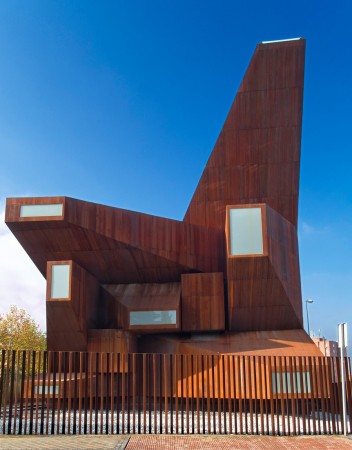
Parish Church of Santa Monica / Vicens & Ramos

Parish Church of Santa Monica / Vicens & Ramos


 Architect: Vicens & Ramos / Ignacio Vicens y Hualde, José Antonio Ramos Abengózar
Location: Rivas-Vaciamadrid, Madrid, Spain
Client: Obispado de Alcalá de Henares
Collaborators: Fernando Gil, Agustín Toledano, Roberto Rodríguez-Paraja, Jesús Gómez, Desirée González, Pablo Gutiérrez, Romina Barbieri, Raúl Rodríguez, Tibor Martín, Patricia de Elena
Photographs: Pablo Vicens y Hualde & Ricardo Santonja


“The project whose is already completed is the third proposal. The first two were rejected and it’s a shame. I think that they were much more interesting, at least from the point of view of adherence to the liturgical rules of Vatican II.”
Vicens & Ramos
Following the guidance of the Diocesan Council of Temples and the program of requirements provided by the same and later adjusted to the needs of the Parish of Santa Monica, the building design integrates in one building all the spaces that correspond to Church, Parish offices and priest housing.

section

The generating idea of the project was that of situating, within the confusion of the surrounding urban environment, a building that would mark a milestone and become a continuos testimony to the spiritual function produced in its interior, and which must necessarily spread and manifest itself permanently to the nearby social and urban medium.
The intention to unify had priority in the conception of the building, that is long and narrow, curved to fit the road along its westerly aspect and cut off abruptly at the north-easterly face. Described by the architect as “an explosion, frozen in an instant after detonation”, the sculptural protuberances at the north end seem to jostle for the light, and almost resemble a hand pointing heavenwards.
 

The complex is made up of two independent buildings: one houses the church, strictly speaking, and the daily chapel, in a structure with large steel porticos, while a second block with a structure of reinforced concrete accomodates the housing and parochial rooms. Both are tied together by a continuous corten stell skin which, as a whole, creates a piece that gives an image of great unity and rotundity.
The northern and southern façades are symmetrical except in the building of parochial spaces, where on the northen face the steel skin curves to form the main access to the nave.

At the foot of the nave is located the High Chore, which can be accessed directly from the nave by a stairwell and has a seating capacity of 77 and a common lightning system with that of the rest of the nave. The most public and daily zones turn towards the Avenida de la Integración, while the bedrooms face the interior street.
More info about Vicens & Ramos over here.


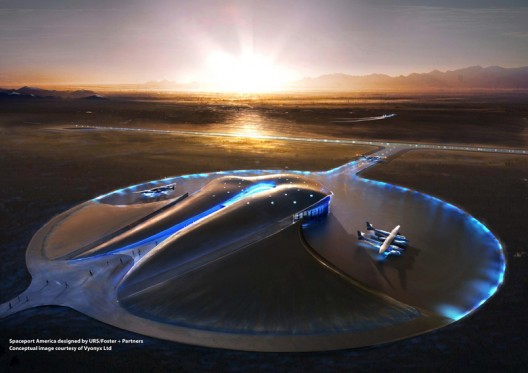
Spaceport America began construction last Friday

Spaceport America began construction last Friday

Spaceport America, the first spaceport ever began construction last Friday in New Mexico. The spaceport, designed by Foster + Partners and URS Corporation will host commercial operations by private space travel companies, like Virgin Galactic.
The 110,000-plus square foot facility will use cost-effective, energy-efficient green building practices and will be built to be LEED-certified. From earth-tubes that will pre-condition the air to reduce HVAC costs by 50-70% to solar thermal panels on the roof for hot water to the embedded in-floor loop system, Spaceport America is both unique and iconic in terms of visual and environmental design.

Seen at Gizmodo. More images after the break.


هتلهای عجیب

هتل شناور در سوئد

در این هتل همه امور اجتماعی در جریان هست و مهمانان میتوانند از هوای خوب و دریای بی کران لذت ببرند و شبها در کنار صدای امواج به خواب بروند

Floating Hotel in Sweden

هتل شن و ماسه در بریتانیا

اولین هتل ماسه ای جهان به شکل یک قلعه در ساحل Weymouth در شهر ساحلی Dorset در بریتانیا است.

Sand Hotel in United Kingdom

هتل جنگل در مکزیک

V-Houses, an amazing jungle retreat near the fishing village of Yelapa in tropical Mexico. این دیگه خیلی جالبه . وسط جنگل با حال و هوای بکر طبیعت تازه اونم با همچین معماری عالی و عجیبی . درست شبیه اهرام وارونه هستند اما خودشون بهش میگن موشک هتل .

این هتل در یک جنگل گرمسیر در نزدیکیهای دهکده ماهیگیری Yelapa در کشور مکزیک قرار دارد.

Jungle Hotel in Mexico

Jungle Hotel

هتل یخ در کانادا

یخ هتل منحصر به فرده و هرجور حساب کنید یک تجربه منحصر به فرد و غیر قابل قیاس هست و یه جور خود آزاری هم محسوب میشه .

Ice Hotel in Canada

هتل کپسول در ژاپن

به اینها میگن هتل کپسول . احتمالا باید خیلی هم ارزون باشه . اما من که یاد قفسه های سردخونه افتادم.

Capsule Hotel in Japan

هتل جعبه بقاء در هلند

هتل امدادی ، که استفاده ای دیگه از جعبه بقای هست ، در یک کانال در آمستردام هلند واقع شده است. ازین جعبه ها در پای دکل ها و سکوهای دریایی استفاده می کنند.

Survival Pod Hotel in Netherlands

غار و هتل در ترکیه

یک هتل غیر عادی با فضایی افسانه وار و یک محیط کاملا عجیب و غریب. یه جورایی مثل کندوان خودمونه . فقط اونا میدونن باید چجوری جاذبه هاشون رو معرفی کنن و ما هم فقط تماشا می کنیم.

Cave Hotel in Turkey

هتل هواپیما در سوئد

هم اکنون شما می توانید شب را در یک جت واقعی اقامت داشته باشید.

Airplane Hotel in Sweden


هتل خونه جنگلی در هند

به این میگن یک صمصمیت حقیقی با طبیعت. حیات وحش و آماده برای دریافت تجارب فوق العاده و شگفت انگیز واقع در قلب طبیعت و حقیقت.

Treehouse Hotel in India

هتل زیر آب در فیجی

یک مسکن لوکس در عجیب ترین شرایط ممکن.زیر دریا .. باید خیلی جالب باشه.

Underwater Hotel in Fiji


لوله زه کشی هتل در اتریش

این یکی دیگه باور نکردنیه . این اتریشی ها معماری و سبک کارهاشون همیشه عجیب و غریب بوده.

Drain Pipe Hotel in Austria

ORDOS 100 #41: Single Speed Design

ORDOS 100 #41: Single Speed Design

This villa is located in plot #92 of the ORDOS project.
Architects: Single Speed Design
Location: Ordos, Inner Mongolia, China
Principals in Charge: Jinhee Park AIA, John Hong AIA/LEED
LProject team: Brett Albert, Frederick Peter Ortner, Matt Allen, Caroline Lang, Clara Wong, Bao Wei
Structural Engineer: Paul Kassabian, SGH Inc.
Design year: 2008
Construction year: 2009
-2010
Curator:
Ai Weiwei, Beijing, China
Client: Jiang Yuan Water Engineering Ltd, Inner Mongolia, China

Constructed Area: 1,000 sqm aprox

Early on we noticed that that the overall project siteplan is a cleverly devised urban scale display system for a hundred different architectural experiments. Instead of deploying traditional property lines where no audience can tread, pedestrian easements relentlessly surround every lot. Within the abstraction of the desert, each team is liberated: without formal guilt we are given license to create autonomous product-like villas that can be viewed on all sides by an equally abstract audience.

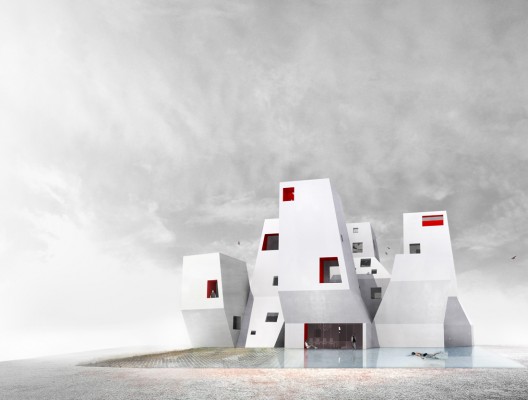
From this cue, we took the opportunity to create a solution that on one hand references the local environment but also offers a more prototypical attitude toward energy savings - a solution that might be adapted to other building types beyond housing. Eight towers are proposed, each containing a separate and distinct program: an entry tower, a living tower, a food tower, a gym tower, 2 bedroom towers, and 2 bathroom towers. Through the distortion of each tower’s geometry, strategic connections and segregations are created. Organizing the program in this way permits greater efficiency, as only one-third of the towers are occupied and require the consumption of energy at any given time during a diurnal cycle. The organizational system also heightens the experiential differences between rooms that are necessarily similar in size, while creating a high level of porosity between interior and exterior spaces.


Duplex House for Make It Right / GRAFT

Duplex House for Make It Right / GRAFT

ne_street

GRAFT was one of the first practices that started working with Make It Right to redevelop the Lower 9th Ward area in New Orleans. Their single family home design has been picked by 3 homeowners so far, with 2 already finished and 1 in construction phase.
GRAFT’s proposal for the new set of duplex homes we featured yesterday, has LEED Platinum certification and in my opinion proposes an interesting strategy to connect with the street level, mandatory to all MIR projects.
Architect’s description and more images after the break:
After the success of the first round of designs for the Lower Ninth Ward a new group of architects was invited to design dwellings. GRAFT donated another design, this time with a larger building for up to two families. The Round 2 house deploys a similar formal strategy of blending as does GRAFT’s Round 1 shotgun house. A strong visual connection to the Round 1 house was maintained in order to bring consistency of character to the New Orleans’ Lower Ninth Ward, which will continue to be populated by these types of dwellings. Here, we have additionally drawn inspiration from the camelback shotgun typology. Historically, camelbacks emerged as a way for residents to add a partial second story to a residence, whether simply to gain more space for a single-family home or to add a rental unit at the rear of a structure. In our design, we utilize the camelback strategy to stack a second efficiency unit above a first floor shotgun house.

nw_backyard

A critical programmatic goal within the design is to establish a strong connection between the private interior zone of the house and the shared public space of the street. The primary challenge in achieving this goal lies in negotiating the 8’-0” first floor height that is required to make the houses safer from future flooding of the street level. The broad and spacious deck located in the front yard mediates the relationship between public and private by raising the deck 5’-0” above grade. This offers a welcoming gesture to the street while at the same time creating a semi-private space for the inhabitants of the house to enjoy.

section

section

Residents may enter the house from the side porch landing, leading them into a large open space, containing living, dining and kitchen functions. The lower unit has a flexible three bedroom layout that can be converted into a two bedroom and office layout if desired. The master suite at the rear of the house contains an en-suite bathroom that shares a common wet wall with the unit’s other bathroom and kitchen making a cost-efficient plumbing core.

ne_above

An exterior stair carries the inhabitants of the efficiency unit up to a rooftop terrace entry deck. This secondary deck level may be utilized as a private deck for the upper dwelling. It provides a generous outdoor living space, views of the neighborhood, space for a small vegetable or herb garden, and easy access to the solar panel array for maintenance. The upper unit itself is designed to be a simple one bedroom dwelling with a living room and dining area facing the backyard. Here the efficiency kitchen shares a wall with the bath to form a cost-efficient plumbing core. The kitchen forms an ‘L’ at the perimeter of the living and dining area in order to create an open and inviting space.


Xixi Wetland Art Museum / Studio Pei-Zhu

Xixi Wetland Art Museum / Studio Pei-Zhu

by Studio Pei-Zhu

Chinese Studio Pei-Zhu has designed the Xixi Wetland Art Museum located in a rural nature preserved near Hangzhou, China. The concept stems from the interaction between building and nature. As leaves fall from trees they arrive naturally on the ground. The resulting form creates shelter against the earth.
This design creates the genuine qualities of scattered, fallen leaves and shelter through five buildings. Some leaves overlap and attach with other leaves. One leaf remains separate, yet still unites in visual language with the linked leaves. The four linked structures house functions for business, recreation, a hotel, restaurant, and reception. The single standing leaf is the art museum.
The buildings are covered by light colored, reflective zinc panels that have a brushed finish, resulting in a diffused and soft reflection of their interactions with people and nature. this blending influences a person as they experience the museum. All colors, light, and details merge into a continuous representation that is not recognizable as individual objects, but are distinguished as a uniform and natural image.

Seen at designboom. More images after the break.


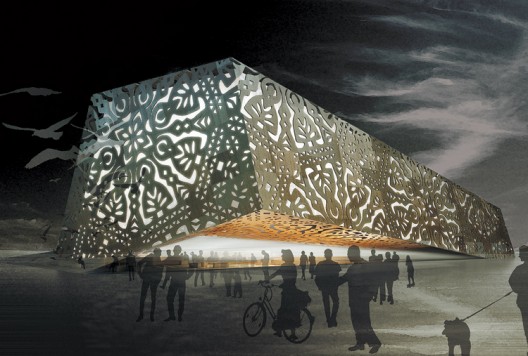
Polish Pavilion / WWA Architects

 Polish Pavilion / WWA Architects

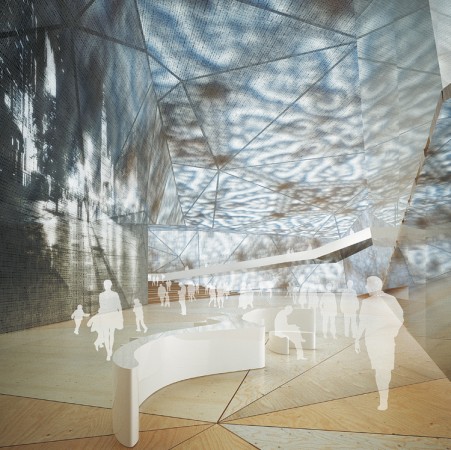
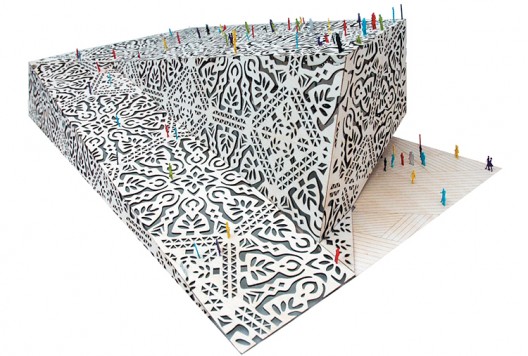
WWA Architects have created a conceptual design for Polish Expo 2010.  With the exhibition housing pavilions from countries all over the world, each pavilion must provide a strong aesthetic message to attract visitors and then provide insight to the country. WWA’s pavilion creates a distinct stylistic motif taken from the folk-art paper cut-out to create a “memorable cultural ideogram”.   The intention was for “the structure décor to draw on and make reference to tradition, but ultimately to be that tradition’s contemporary reinterpretation, a creative extension into the present day by way of inspiration rather than replication,” explained the architects.
More images and more about the pavilion after the break.

Striving to make the design more than a literal interpretation of the folklore patterning, the architects seek to use the design in “a purely architectural dimension”  to create an attractive space aesthetically as well as functionally. The slanting planes of the structure create “a geometrically intriguing and flexible space that can be creatively apportioned, by inner divisions, to different exhibition, performance and utility functions and uses.”

The pavilion creates a route for the visitors to follow, which outlines a logical progression through the space.  The path first circulates around the information center before leading to the full-height exhibition space.  This main area, with light filtering through the cut-out patterns of the elevation, consists of solid walls that function as screens.  The screens project images of Polish city life and provide the backdrop for cultural performances in an effort to place the viewer in the appropriate setting.
The route continues to flow through the pavilion, leading up a terraced viewing platform and eventually to the roof level, known as the “viewing spot.”  The slanted roof provides an area for outdoor performances as well as prime seating for viewing the whole exhibition.

Wood is the main construction and finishing element while the outer layer of the elevation is made of impregnated laser-cut plywood mounted on glued wood construction modules with flitch plates. Panel wall elements made of glass, polycarbonate, hydro or UV resistant materials are mounted on the outer side of the modules. On the inner side, semi-transparent PCV or Tyvek type material membranes will be additionally mounted, on which the patterns of the outer elevation will be projected.


Vaeksthuset Botanical Garden / Cebra

Vaeksthuset Botanical Garden / Cebra

Cebra, a Danish architecture firm, will design a botanical garden for Aarhus University, Denmark’s second oldest and second largest university (after the University of Copenhagen).  The botanical garden and greenhouse design will bring greenery to the campus by providing 29,600 sq feet of an expansive area of flora and fauna.. The project was designed for a building competition that required the restoration of existing buildings and the creation of one new building.
More about the design after the break.

Entitled the “Vaeksthuset,” the botanical garden creates an attractive space for students meandering around the campus. The interior features round pods that are inspired by natural forms.  A facilities complex branches off the gardens to provide office space and cafés.

The third component of the project, an outdoor garden, will be partially covered and connects to the greenhouse under a long glass corridor.  In the greenhouse, the largest dome is covered with a glass roof, allowing natural light to nurture the plants.
With this design, Cebra aims to make nature an integral part of the campus and create a new atmosphere for the students to experience on a daily basis.
As seen on designboom.

This increible bus stop was designed by Dennis Oppenheim in Ventura California

This increible bus stop was designed by Dennis Oppenheim in Ventura California

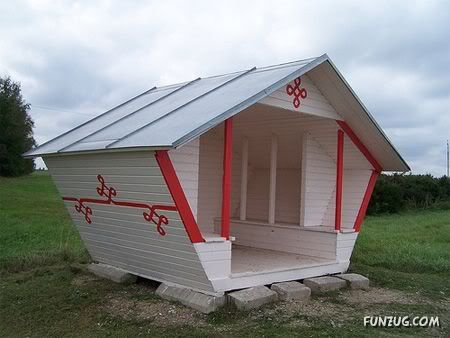
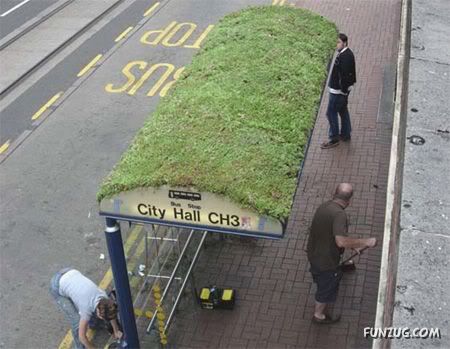
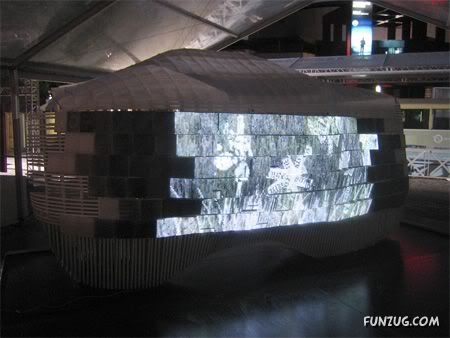
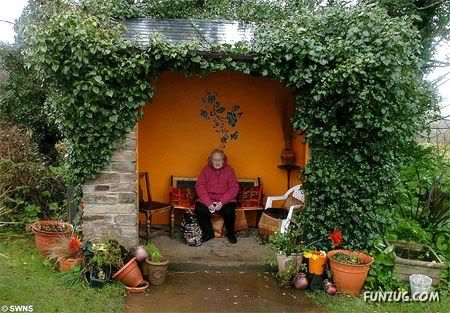
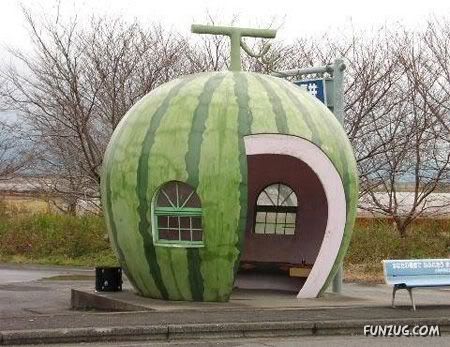
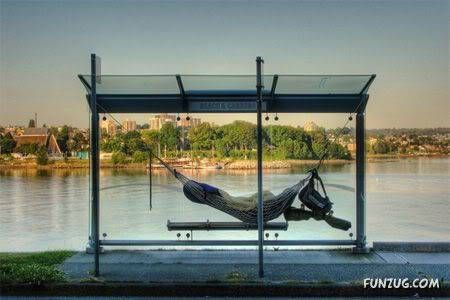
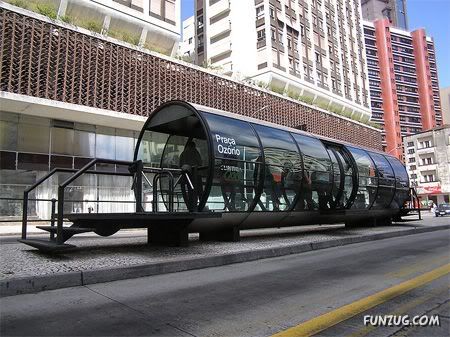
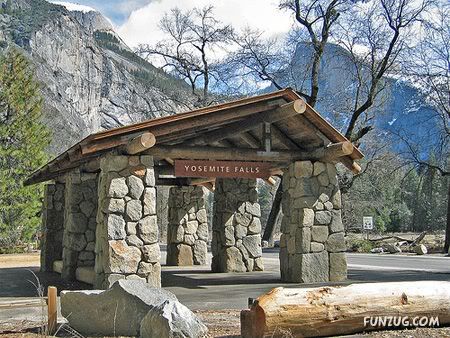
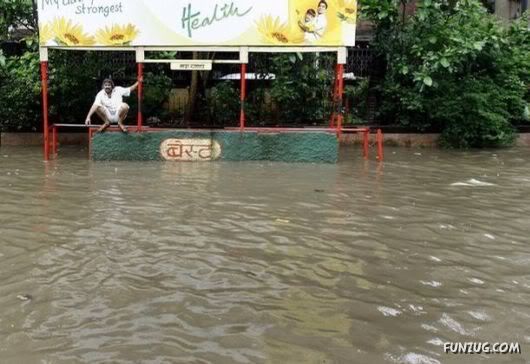
Cool Bus Stops around the World


This bus stop allows skaters to go on a mini ramp attached to a bus stop,

Cool Bus Stops around the World


It's a Quiksilver ad Swing on a Bus Stop in London, part of Bruno Taylor's "Playful Spaces"

Cool Bus Stops around the World


Art project

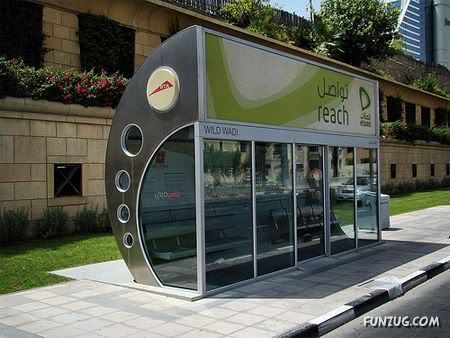
Air-conditioned bus stop, presumably near Burj Al Arab hotel in Dubai

Cool Bus Stops around the World


The Simpsons Bus stop in Germany, The caption says "Use Only In Case of Sith"

Cool Bus Stops around the World


Advertising for the movie This
Star Wars "faux light saber" bus stop ad lights up at night.

Cool
 Bus Stops around the World


Soviet era bus stop

Cool Bus Stops around the World


This living room bus stop was created by Ikea as marketing for the Design Week 2006

Cool Bus Stops around the World


Australia Post Bus Stop Advertisement

Cool Bus Stops around the World


3M was so sure their Security Glass was unbreakable,

they put a large stack of cash behind it and shoved it in a bus stop.

Cool Bus Stops around the World


Cool Bus Stops around the
 World


Cool Bus Stops around the World


Cool Bus Stops around the World


Cool Bus Stops around the World


Cool Bus Stops around the World


Cool Bus Stops around the World


Cool Bus Stops around the World


Cool Bus Stops around the World


Cool Bus Stops around the World


Cool Bus Stops around the World


Cool Bus Stops around the World


Cool Bus Stops around the World


Cool Bus Stops around the World


Cool Bus Stops around the World


Cool Bus Stops around the World


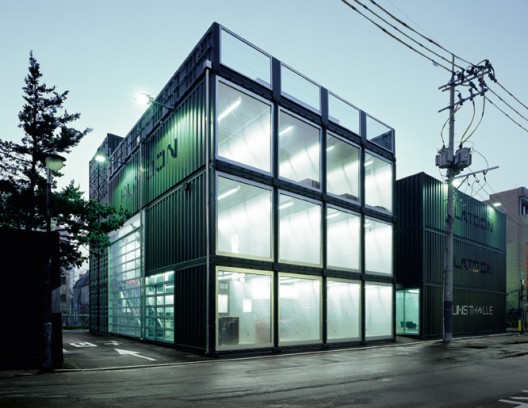
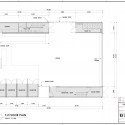
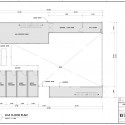
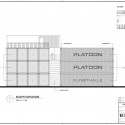
Platoon Kunsthalle / Graft Architects

Platoon Kunsthalle / Graft Architects

Architects: Platoon Cultural Development + Graft Architects
Location: Seoul, Korea
Program: Exhibitions, Bar & Restaurant, Event Hall, Artist Studios, Library Lounge, Office Studios, Workshop Room, Roof Top Bar
Structure: M. Cabestany
Footprint Area: 415 sqm
Main hall Area: 272 sqm
Project year: 2008-2009
Photographs: Platoon
 
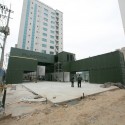
construction process
 
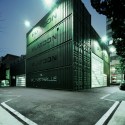
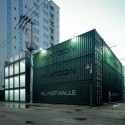
PLATOON KUNSTHALLE opened its doors on 11th april 2009. PLATOON KUNSTHALLE is set up in seoul as a space for subculture in Asia. its programmatic orientation towards cultural movements beneath the radar creates a dynamic space where new ideas are born and presented.
The platoon Europe headquarters in berlin was established in 2000. it runs diverse culture and communication projects in cooperation with an international community of 3,500 creatives from all different professions.

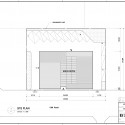
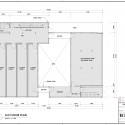
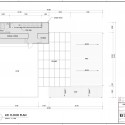
first floor plan

PLATOON KUNSTHALLE is not about entertainment. The program will provide a communication platform for anybody interested in subcultural creative fields like street art, graphic design, fashion, video art, programming, music, club culture, political activism etc.
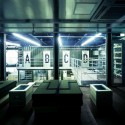
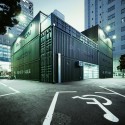
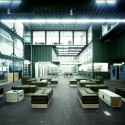
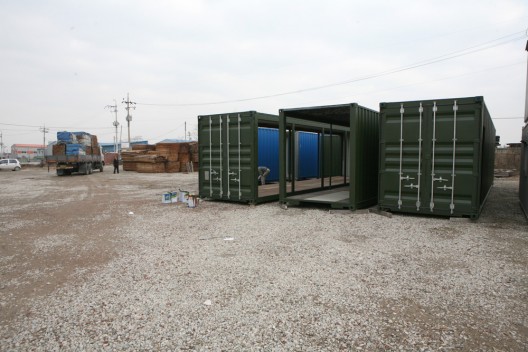
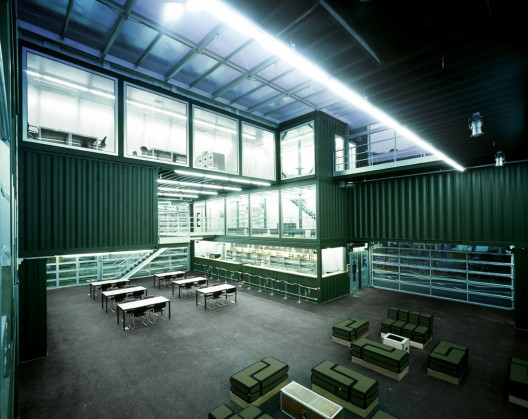
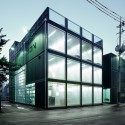
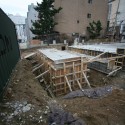
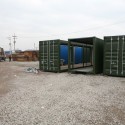
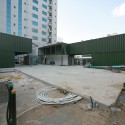
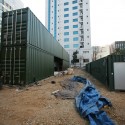
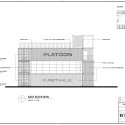
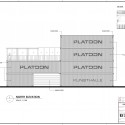
PLATOON KUNSTHALLE is built of 28 iso cargo containers. As icons of a flexible architecture in a globalized culture, the stacked containers form a unique construction that can be rebuilt anywhere else any time.

construction process

As PLATOON KUNSTHALLE is located in the upscale cheongdam area the confrontation of subculture with the close-by design houses, commercial galleries and luxury brand stores creates a tension and interaction between the two worlds.
PLATOON KUNSTHALLE provides showcases of underground artists, studio residencies and a fine selection of cutting-edge stage performances to introduce the energetic potential of subculture in Korea and Asia.

Subculture at PLATOON KUNSTHALLE is presented in different formats like exhibitions, movie nights, concerts and multimedia performances, workshops, discussion panels and special events. the four scholarship programs give young upcoming artists from Korea and abroad the opportunity to develop creative projects at the PLATOON KUNSTHALLE. the four showcases present every month striking works from the subculture and streetart field including leading artists of the international urban art scene.

                                     construction process      construction process      construction process


Benetton Competition / Scheurwater + Hoven

Benetton Competition / Scheurwater + Hoven

In addition to the Benetton competition providing participants with the possibility to redefine the influence of retail in an urban landscape, the competition also provided participants with the choice to design “Building A” or “Building B”.  While we shared some of the winning proposals for Building A (Grzegorz Witold Woronowicz and Giuseppe Iodice), we now share Maarten Scheurwater and Oliver van den Hoven’s proposal for Building B, which placed second in the competition.
More about the winning proposal after the break.
The competition is interesting because although the two buildings are independent, with their locations about 800 meters apart, their programmatic requirements and square footage are identical.  As with Building A, the competition clearly expressed the need for the 12 level building to be formatted in this manner: the underground levels must provide parking and storage space; the ground and first floor (1200 m² each) must be subdivided into 3 commercial units, the second to fourth floor (900 m² each) are designate for office space; the fifth and sixth floors (675 m² each) are for office facilities; and the seventh floor (675 m²) will be apartments.

“The Benetton competition brings together two seemingly conflicting domains: the dynamic world of fashion on the one hand and the static domain of architecture on the other. The central objective of this project is to design a timeless building for an industry that creates new collections and appearances every season,” explained Scheurwater.
For Scheurwater’s proposal, a projected volume roughly covering the entire site is split into two parts: a cube and a thin slab.  The void adds an intimate shopping experience for those passing by to become attracted to the entrance area marked by the two split forms.   This small space creates a welcoming environment to combat the massive form.  ”The programme in the competition brief implies a thinning from the base upwards. This thinning is purposely internalized in this project by means of a large void that gets larger towards the higher levels,” explained the architect.  By keeping the thinning effect internal, the structure maintains it massive silhouette throughout the levels.

Most of the facade features a curtain wall design with 4mm thin slabs of local Persian marble mounted on the outer glass panel of the curtain wall.   The facade creates a translucent feel as light and shadows glow through the marble to highlight the openness and lightness of the interior.  The facade does not only create an interesting environment at the street level, but also carries those same properties through its higher levels.  The filtered light “renders the beautiful textures in the marble and brings calm and character…to this inner world”.  As the light intensity changes throughout the day, so to does the appearance of the facade.  During the night time, the light from the office spaces, shops and apartments filters through the facade in different directions to light the structure “like a lantern that can be distinguished from as far as the elevated highway and further to the South.”

Scheurwater van den Hoven Architecten
Maarten Scheurwater
Olivier van den Hoven

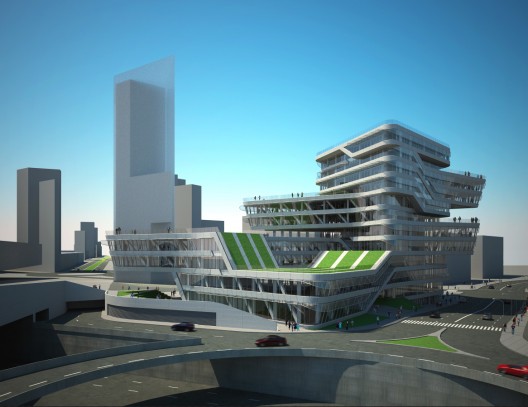
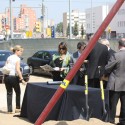
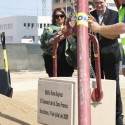
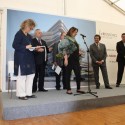
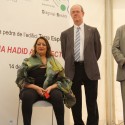
First stone of the Spiral Tower by Zaha Hadid in Barcelona

First stone of the Spiral Tower by Zaha Hadid in Barcelona

4-copy

Today at 11.00 AM took place the laying of the foundation stone of what will be the new iconic building in the area of Barcelona’s Forum, the Spiral Tower. This university campus will be located at the end of Avenida Diagonal, one of the main avenues of Barcelona, beside the Forum building designed by Herzog & de Meuron for the Forum of Cultures held in 2004.
Zaha Hadid came around 11:15 and the event had an intense political presence (the Mayor of Barcelona Jordi Hereu, mayors from areas like Maresme and Besós and key representatives of the Consorsi). The building, located at the confluence of streets Taulat and Sant Ramon de Penyafort, will have a ground surface of 20,650 sqm.

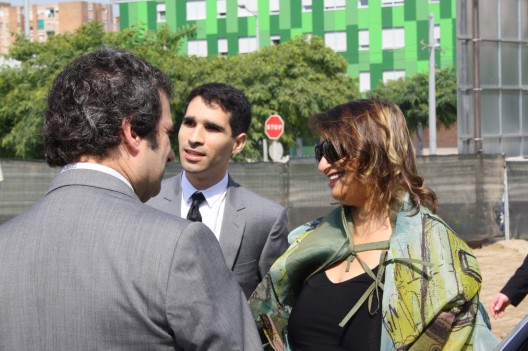
img_1366

Hadid’s speech was short, she recalled his first trip to Spain when she was 7 years and then she talked about a competition in which she participated 20 years ago, related to the design and extension of the Diagonal Avenue. At that moment she had the opportunity for a better understanding about the urban development of Barcelona and [as she said there] it has been a big influence on the design of the Spiral Tower.

2-copy

Design and Context

Zaha Hadid’s design for the Edifci Campus confrms the role of the 22@ area at the very forefront of Barcelona’s changing water edge. The tower’s striking design creates a new presence in a territory of transition. The spiralling tower stitches the border of the municipalities of Barcelona and Besòs, creating a new infrastructure that is a joint venture of the two cities and two clients: El Consorci, Zona Franca de Barcelona y b-TEC, Consorci del Campus Interuniversitari del Besòs.
The design articulates the transition between the forum and the campus, between the new equipments and parks water-front area, in Barcelona, and the requalifcation of the delta of the river Besòs area, in Sant Adriá del Besòs. The formal theme of the spiral actively binds the two together with an encompassing movement, stimulating the seamless integration of the city fabric, connecting in a dynamic way, the different surrounding areas.

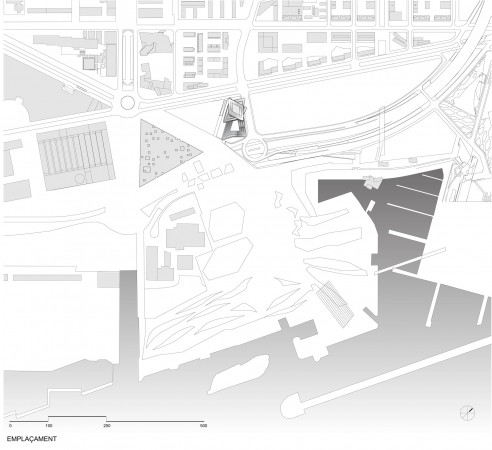
situation plan

situation plan

Synergies and Opportunities

The new node created at the Edifci Campus anchors itself on the functional mix of university and office spaces, establishing a bridge between the world’s of education, research and business, promoting new opportunities of interaction between the diverse types of users through its new public spaces, the courtyard and the atrium. Our design proposal takes on the challenge of combining the needs and aspirations of the two clients and creating a symbiosis between their programmes. Thinking of the two briefs as one single building is the most coherent, effcient, sustainable and cost effective way to fulfl the potential of this great opportunity. This new building form, defned as a combined entity created by fusion, will set a new typology of intervention within the Knowledge City concept. The critical mass generated at the site will act as a catalyst on the transition between the forum and the campus, creating potential new synergies between the different stake holders and contributing actively to the overall redevelopment of the 22@ area.

img_1352

5-copy

Connectivity and Public Space

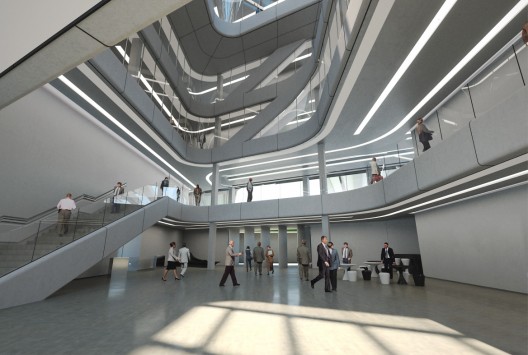
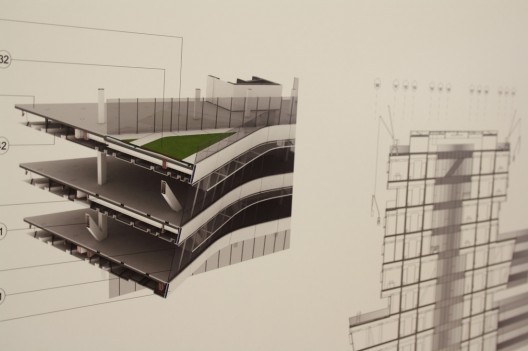
The fluid character of the tower is generated through an intrinsically dynamic composition of volumes that dissolves the classic typology of the tower and the podium into a seamless piece. The building uses the site’s inclined topography to redesign the landscape in order to create seamless accessibility between the new campus and the forum. Through the use of cantilevers, the building lifts from the street level, releasing the ground to be occupied by civic / public uses. The continuous, ‘choreographed’, spiral movement ‘weaves’ a series of public spaces, connecting the campus, through the courtyards and under the cantilevers, to the forum beyond.

Credits

Architect: Zaha Hadid Architects and Patrik Schumacher
Location: Barcelona, Spain
Project Director: Tiago Correia
Project Architects: Alejandro Diaz & Aurora Santana
Project team: Fabiano Continanza, Víctor Orive, Rafael González, Oihane Santiuste, Mónica Bartolomé, Raquel Gallego, Esther Rivas, Jessica Knobloch, Hooman Talebi, Maria Araya, Ebru Simsek
Local Architect: Ferran Pelegrina Associats SL [Barcelona, E]
Technical Architect: J/T Ardèvol i Associats SL [Barcelona, E]
Structural Engineering: BOMA Brufau, Obiol, Moya & Ass. SL [Barcelona, E]
Structural Engineering: Adams Kara Taylor [London, GB] (Concept Stage)
M/E/P Engineering: Grupo JG. SL [Barcelona, E]
M/E/P Engineering: Max Fordham LLP [London, GB] (Concept Stage)
Facade Engineering: Ferrés Arquitectos y Consultores. SL [Barcelona, E]
Lighting Design: Architectural Lighting Solutions [Pamplona, E]
Health & Safety: J/T Ardèvol i Associats SL [Barcelona, E]
QS / Cost: J/T Ardèvol i Associats SL [Barcelona, E]
Geotecnia: Losan [Barcelona, E]
Project Area: 27,650 sqm
Project Year: 2006-2011


Cloud Tower by the next ENTERprise - architects

Cloud Tower by the next ENTERprise - architects

cloud-tower-by-the-next-enterprise-architects-17.jpg

Cloud Tower is a pavilion for open-air concerts in the grounds of a castle near Vienna, Austria, designed by the next ENTERprise - architects.

cloud-tower-by-the-next-enterprise-architects-16.jpg

Located at Grafenegg Castle along with the copper-clad concert hall in our previous story, the auditorium occupies an existing depression in the landscape, accentuated by further excavations.

cloud-tower-by-the-next-enterprise-architects-18.jpg

Visitors enter the auditorium through a corridor cut into the small hill created with the displaced earth

cloud-tower-by-the-next-enterprise-architects-8.jpg

The auditorium has 1,670 seats with a further 300 on the lawn, while the stage can accommodate an orchestra withup to 200 performers.

cloud-tower-by-the-next-enterprise-architects-1.jpg

The 23 metre tall, steel stage-roof is made of steel and glass, reflecting the surrounding sky and trees.

cloud-tower-by-the-next-enterprise-architects-2.jpg

Photographs are by Lukas Schaller.

cloud-tower-by-the-next-enterprise-architects-14.jpg

Here’s some more information from the architects:
Project title: Wolkenturm – Freiluftbühne & Schlosspark Grafenegg / Cloud Tower – Open-air pavilion Grafenegg
the next ENTERprise - architects
Land in Sicht – landscaping
The castle grounds of Grafenegg are almost 250 years old. Every period has left its traces, and this stylistic variety is one of the reasons for the park’s appeal. The area, with the castle and moat at its centre, has a size of approx. 31 ha. The park and its dendrological collection are open year round and are accessible from two main entrances on the west and east side.

cloud-tower-by-the-next-enterprise-architects-4.jpg

The open-air pavilion in the park is used as a stage during festival season in summer, and as a attraction for excursionists and flaneurs – similar to the gazebos in historical landscape gardens, which were designed as a destination or a stop-over on extended walks.

cloud-tower-by-the-next-enterprise-architects-5.jpg

The pavilion is part of a relational field, recontextualizing the existing elements of the ensemble: the ‘new’ entrance, the riding school, the castle, the ‘Black Gate’ and the ‘Große Senke’ (lit. transl.: large depression). With great ease the pavilion inserts itself into the landscape and, through its topographical configuration, reinterprets formal elements of the landscape garden – the play with perspective and visual relations, with contraction and expansion, with enclosure and opening.

cloud-tower-by-the-next-enterprise-architects-6.jpg

The “Schneise” (loosely translated: an incision in the landscape) creates a vista linking the riding school to the Black Gate, and serves as an entrance to and a passage through the auditorium area. The staging of views and spatial sequences, the framing and hiding of points of attraction, often achieved by the meandering layout of paths in the traditional landscape garden, is a theme taken up by varying the elevation of the incision to achieve this effects. Coming from the castle, the visitor is enticed to proceed by the silhouette of the “cloud tower”, visible behind the artificial mound. Immersing himself into the incision, he tunnels through the hill and – after passing this deep narrow – enters the wide arena of the auditorium and the stage, the ‘cloud tower’ of the stage roof suspended above it.

cloud-tower-by-the-next-enterprise-architects-7.jpg

The basic rule of acoustics for open-air stages, ‘what you see is what you hear’ serves as a cue to explore affinities between perspective and acoustic space. The topography of the existing depression – the “Große Senke” – is amplified by modeling the terrain. Artificial hillocks are created by further excavating the depression and subsequently redistributing the soil at its perimeter. Clearly distinguished from the natural terrain by their geometry, stage and auditorium nonetheless merge fluidly with the topography of the site.
cloud-tower-by-the-next-enterprise-architects-15.gif
The stage roof is designed as an autonomous, sculptured object. Suspended above the landscape on a level with the tree canopies it is placed among the groups of trees as if it were one more of them. The shiny metal surface on the outside reflects the sky and the trees, turning into a cloud-tower.

cloud-tower-by-the-next-enterprise-architects-10.gif

landscaping: Land in Sicht, Dipl. Ing. Thomas Proksch
structural engineering: Bergmeister und Partner, Dipl. Ing. Josef Taferner
acoustics: Müller-BBM, Dipl.-Ing. (FH) M. Wahl
cloud-tower-by-the-next-enterprise-architects-11.gif
basic data
address: Grafenegg 10, A-3485 Grafenegg
country: Austria
client: Grafenegg Kultur Betriebsges. m.b.H., St. Pölten, A
architect: the next ENTERprise – e.j.fuchs | mth.harnoncourt
type: music pavilion
additional information
resident orchestra: Tonkünstler-Orcheste r Niederösterreich
artistic director Grafenegg International Music Festival: Rudolf Buchbinder

cloud-tower-by-the-next-enterprise-architects-12.gif

calendar
competition: Feburary 2005
planning phase since: August 2005
under construction since: July 2006
completed in: June 2007
team
Paul Vabitsch, Egon Niedertscheider, Hannes Oswald, Maja Ozvaldic, Marianna Milioni, Daniel Harrer, Waltraud Hoheneder, Claudia Cavallar
overall planning: ARGE the next ENTERprise | Land in Sicht
architect: the next ENTERprise – e.j.fuchs | mth.harnoncourt
landscaping: Land in Sicht, Thomas Proksch, Wien / Vienna
structural engineering: Ingenieurteam GmbH Bergmeister, Josef Taferner, Jochen Ehmann, Vahrn / Varna, I
acoustics: Müller-BBM GmbH, Prof. Karlheinz Müller, München / Munich, D
light design: Ploderer & Partner, Christian Ploderer, Wien / Vienna
light planning: Wiltschko Lichtplanung, Berndorf, A
calculation: sglw architekten, Werner Silbermayr, Wien / Vienna
reinforced concrete materials consulting
Ingenieurbüro Prof. Schießl, Christian Sodeikat, München / Munich, D.

cloud-tower-by-the-next-enterprise-architects-9.gif

project management: NÖ Hypo Bauplanungs- und Bauträgergesellschaf t m.b.H.., Johannes Reiterlehner, St. Pölten
controlling: Azberger-Höss ZT GmbH, St. Pölten
Fachplaner
construction supervision: BM Horst Pratter, Judendorf-Straßengel
supervision landscaping: Land in Sicht, Andreas Beneš
building physics: Wolfgang Hebenstreit, Wien / Vienna
geological survey: Mario J. Pototschnik, Wien / Vienna
site survey: Gerhard Senftner, St. Pölten
HKLSE-Planung: Christian Koppensteiner, Wien / Vienna
contractors
general contractor: Alpine Mayreder Bau GmbH, Zweigniederlassung NÖ, Horn
steel construction: Pagitz Metalltechnik GmbH, Wien / Vienna
prefabricated concrete: Alfred Trepka GmbH, Ober-Grafendorf
drywall: Perchtold Trockenbau GesmbH, Wiener Neudorf
Schlosserarbeiten: Heinrich Renner Ges.m.b.H., Langenlois
carpenter: Pöchlhacker Holzbau GmbH, Ybbs
glazing: Rigo-Glas GmbH, Wien / Vienna
paint: Farben Traht, Etsdorf am Kamp
electrical installation & equipment: Eichinger&Stuber, Langenlois
plumbing equipment & installation: Caliqua Gebäudetechnik GmbH, Wiener Neudorf
garden & landscape gardening: Kanovsky Gmbh, Klagenfurt

cloud-tower-by-the-next-enterprise-architects-13.gif

technical data
seats: 1.670 auditorium seats, 300 lawn seats
height of stage roof: 23 m
stage width: approx. 20 m
stage depth: approx. 11 m
maximum orchestra stength: approx. 200 artists
net floor area: 651 m²
 stage: 228 m² 
backstage area: 203 m²
 artists’ washrooms: 27 m² 
 acoustic buffer: 16 m²
 artists’ wardrobes: 35 m²  piano storage: 11 m²
 HVAC room: 15 m² audience washrooms: 115 m²
Park area: 31,5 ha
construction
Stage structure: concrete; stage roof: steel/glass; auditorium: prefabricated concrete; stage backdrop: double-layered lightweight structure.

Chaoyangmen SOHO / Zaha Hadid Architects

Chaoyangmen SOHO / Zaha Hadid Architects

 
soho_zaha
 
Bert from Moving Cities (a blog  focused on contemporary architecture in China)  just told us about a new project by Zaha Hadid in Beijing: Chaoyangmen Soho.
The announcement was made by Pan Shiyi, a real estate mogul  chairman of SOHO China. Pan has been working on huge developments, such as the Commune by the Great Wall and several commercial projects in central Beijing.
What’s interesting on SOHO’s developments, is that they invite renowned architects to participate, under heavy budgets restrictions in order to delivery quality projects for the “stylish middle class”.  They also have a great corporative culture as you can see on their website.
But back to this project, Bert points us out to a recent interview with Pan Shiyi:
Q: Which development project is your favourite?
A: Chaoyangmen SOHO. It is our latest development. I asked British architect Zaha Hadid to design a creative project, and she did. The project is unique, like the Beijing bird´s nest [Beijing National Stadium].
Read more about this project at Pan Shiyi’s blog. More images after the break.
 
soho_zaha2
soho_zaha3


Zhuhai Opera House / SPF architects

Zhuhai Opera House / SPF architects


SPF Architects, based in Culver City, California, have created an design for the Zhuhai Opera House in Guangdong Province, China.  Learning from the traditional principles of the region,  the opera house’s form gives the appearance of stacked pebbles.  Such an idea was conceived as a way to create a visual balance based on the Chinese principle from the five element theory.   The opera house has three stacked levels that provide varying programmatic activities, such as a 1500 seat auditorium, large plaza gathering space, rehearsal hall, restaurants and other public amenities.  A forest behind the structure gives the impression of growth and sustainability. 
More images after the break. 
Images courtesy of SPF architects.  As seen on designboom.


Business Center Miramare / 3LHD

Business Center Miramare / 3LHD

Architects: 3LHD
Location: Zagreb, Croatia
Project team: Sasa Begovic, Marko Dabrovic, Tatjana Grozdanic Begovic, Silvije Novak, Tin Kavuric, Josko Kotula, Krunoslav Szörsen
Collaborators: Freya (3D), Tehnicke konstrukcije doo, Nikola Miletic, Gadaf Zulbeari
Project year: 2009
Site area: 4,037 sqm
Gross floor area: 37,040 sqm (23,940 + 13,100 underground)
Footprint: 2,084 sqm
Images: 3LHD
 

The competition program is placed on a crossing of two streets, Miramarska and Bednjanska. It is a point of colliding two urban city concepts: north part with classical city blocks of the Zagreb’s lower city enclosed by the railway and the south part primarily along the Vukovarska Street, outlined with modernistic dominant character of mostly public and social buildings.


Concept of awarded project stems from forming a unified structure that will reconcile the surrounding urban matrix and meet the program requirements. Two interacting volumes, a tower with 20 floors and a lower building with 5 floors, unite the planned goals and achieve high quality relations with the neighbouring buildings.. A semi-open atrium between the two buildings connects them with the surrounding public pedestrian surfaces. The underground floors are reserved for garage spaces, ground floor for shops, bars and restaurants. There are 20,000 square meters of office space, and a unique viewpoint at the top of the tower. Simple but at the same time attractive effect of the facade design, made by pulling glass modules in and out, gives the building recognition and uniqueness.


Danish Pavilion for Shanghai / 3XN Architects

Danish Pavilion for Shanghai / 3XN Architects

3XN architects’ proposal for the Danish pavilion for the Shanghai expo 2010 uses their national flag to create a dynamic spatial environment.  ”An exhibition window is an invitation that says: Welcome inside a little piece of Denmark. And in 2010, in the age of globalisation, it is important to add: Welcome to a Denmark that is part of the world,” stated the architects.
The competition for the pavilion was awarded to BIG as we reported earlier.
More about the pavilion after the break.

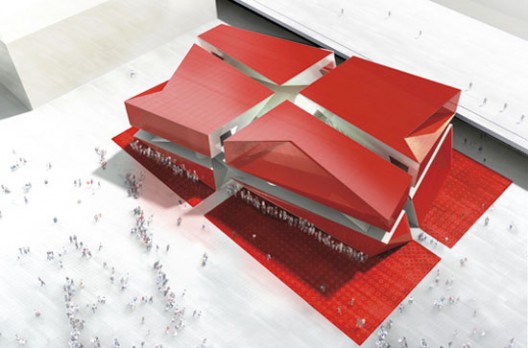
Even from a distance, the 3,000 sqm pavilion, constructed with red and white rectangles, is easily identifiable with the Danes.   Upon approaching, the building is understood as not only being clad in the country’s colors, but also being a three dimensional version of the flag.  The four red rectangular fields form eight blocks and the white creates an open space in the center where users can view exhibitions.  Entrances and exits are emphasized by the slight shifting of the geometric planes that also provide shelter from the rain and shade on sunny days.

Conceptual thinking for the pavilion led the architects to focus on the four areas used to globally market the country: Denmark as responsible and balanced, with a focus on high quality, experimental and courageous, and characterised by environmental awareness, simplicity and efficiency.  Each characteristic receives its own rectangle so that the characteristics are reflected not only in the individual forms, but also in the pavilion itself.
Images courtesy of 3XN.  As seen on designboom.


Darcons Headquarters by Arquitectura en Proceso

Darcons Headquarters by Arquitectura en Proceso

darcons-headquarters-by-arquitectura-en-proceso-top.jpg
 
Young Mexican architects Arquitectura en Proceso have completed the headquarters of developers Darcons in the suburbs of Delicias City in the Chihuahua state of Mexico.
 
darconshead18.jpg
 
The building consists of three stacked, orthogonal volumes with glazed opposite sides.
 
darconshead10.jpg
 
The western facade is shaded by opaque, concrete walls.
 
darconshead4.jpg
 
Photographs are by Francisco Lubbert and Jorge Cajiga.
 
darconshead1.jpg
 
Here are some further details from the architects:
The site is located at a suburban lot of a middle size city in northern Mexico. As one drives towards it and away from the city, the building appears aligned with the road as an arched gate of a medieval town: looking through it one gets the scenery of the rural fields that surround the city.
 
darconshead2.jpg
 
The building was conceived as a frame that captures part of the landscape and at the same time defines a plane that divides the intercity from the suburbs. The skin of the building plays a dual role: on one hand it is the transparent material that allows the view through it, and on the other hand, it is the opaque continuous skin that defines the shape of the frame and protects the interior from solar irradiance.
 
darconshead17.jpg
 
This skin was manipulated in order to differentiate the public space from the internal activities of the company: the main reception and the custumer rooms are outside the envelope raised above the ground as a Piano Nobile and organized as self defined entities.
 
darconshead9.jpg
 
The operation space is contained within the envelope and flows throughout the building in a three dimensional open plan that honors the hierarchical organization of the company. In order to solve the continuity of the circulation the mass of the building was divided in various transversal slices, each presenting an intentionally different profile and two of them defining the geometry of the north and south elevations.
 
darconshead6.jpg
 
The sequential juncture of all the slices creates deviations and convergences between the internal operational route and the external costumer route.

darconshead14.jpg
This was primarily done in an effort to recreate the space complexity produced by a urban grid designed in the style of the 18th century.
darconshead7.jpg
The west elevation also benefits from the rotated planes by casting shades onto itself and minimizing direct sun exposure.
darconshead12.jpg
The rule was meant to be broken at the main entrance where the opaque skin suddenly sift direction to frame a cantilevered volume that flies above the portico.
darconshead3.jpg
This creates a gesture of urban scale to emphasize the hierarchy of the entrance and contain the atrium of the building prior to the stair flight.
darconshead15.jpg
Location: Delicias City, Chihuahua, Mexico.
Use: Office Building
Size: 15,134 Sq ft.
Design Period: 2005
Completion Period: 2008
darconshead8.jpg
Project Name: Darcons Headquarters
Chief Architect: Jorge Cajiga, Raúl Rodríguez, Roberto Villarreal, Reyes Baeza
Design Office: Arquitectura en Proceso
Client: Darcons Construction Company
Sub-contractors:
Structural Design - Estructuristas y Consultores
Project Managment - Urbanismo y Edificación Mexicana
Structural Engineering: EASA construcciones
Photography: Francisco Lubbert, Jorge Cajiga

Design for Teheran / Giuseppe Iodice

Design for Teheran / Giuseppe Iodice

As we shared earlier this week, the Desiging in Teheran international competition urged designers to creatively rethink the potential a retail area can have upon an evolving metropolis (Grzegorz Witold Woronowicz’s won as we reported earlier on AD). Giuseppe Iodice’s proposal placed third as it aimed to create an architecture that  ”would investigate a social, political, cultural function and become an element of dialogue between different cultures…thus assuming a role of balanced mediation between western and eastern culture without renouncing its expressive identity.”
More about the proposal after the break.

Inspired by the high mountain ranges in Teheran, the structure’s form presents itself, initially, as a monolithic mass.   However, upon approaching the structure, the large form finally breaks.  As light penetrates the solid components, it is evident that “inner gorges” are hidden behind the exterior.  These “gorges”, and the interplay of light and shadow that they create, attract passersby who are curious about the inner-holdings of the structure.  Therefore, a dialogue is created between the seemingly mute exterior of the building and its dynamic inner nature.

From a distance, the building sinks into the ground (”Teheran” itself means “going down”) to create an angular volume.  Before reaching contact with the ground, the volume tapers as to create a “great sculpturesque point of view” to attract people passing through the space.


Credits
Study: iodicearchitetti  (www.iodicearchitett i.it)
Architects: Giuseppe Iodice (capogruppo) , Francesco Iodice, Marcello Silvestre, Orsola Pezone
Collaborators: Milena Fusco, Giovanni Di Santo, Francesco Maisto, Mario Cavagnuolo, Donatello Diana
Prize: 3° prize
Client: Benetton Group
Locality: Teheran
Date: 2009

Residential Tower / Meir Lobaton + Kristjan Donaldson

Residential Tower / Meir Lobaton + Kristjan Donaldson

Meir Lobaton + Kristjan Donaldson recently shared their design for a 36 story residential tower in Mexico City, Mexico.   The project addressed the balance between the desire of living in a single-family residence with the cost of the land..
More images and more about the project after the break.
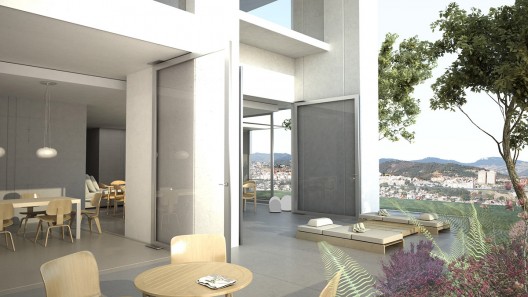
The residential tower provides the family the luxury of living in an apartment building without sacrificing the comfort of a backyard.  Gardens located on every level try to break with the dichotomy between land and building, and, more importantly, provide an area that is attractive and functional for the family members.
 
 
Each floor plan is organized around a single apartment type that is 400 square meters with a gardened
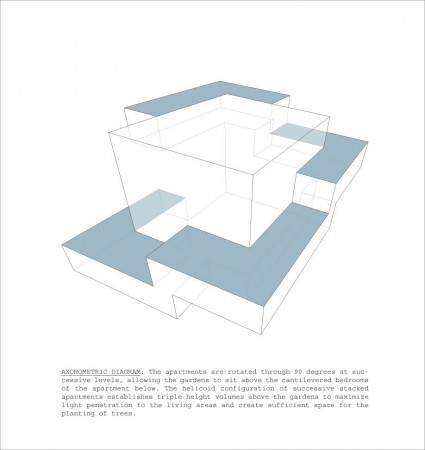
extension of approximately 160 square meters.  By rotating the apartments 90 degrees at successive levels, the gardens sit above the cantilevered bedrooms of the apartment below.
 
 
The shifting horizontal floor planes provide adequate space for full trees to grow. This shifting also balances the greenery, creating a blend of structure and nature, rather than allowing one element to dominate and the second to feel like an after-thought.  The internal living areas are organized to take full advantage of the gardens which adds a feeling of openness to the residences.
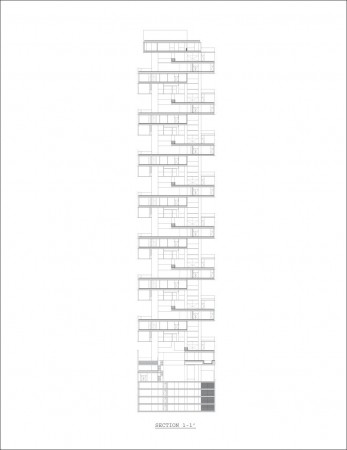
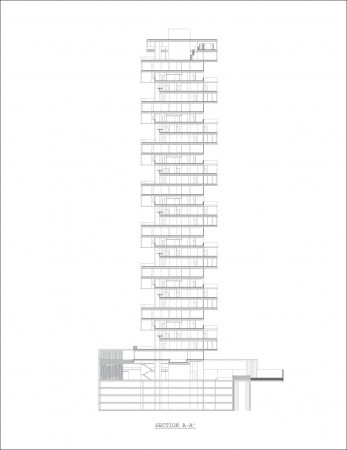
Due to the volatile seismic condition that characterizes Mexico City, a system of deep shear walls and Vierendeel trusses stabilizes the structure while accommodating the rotating floor plans.
TORRE CUAJIMALPA:
Location: Mexico City, Mexico
Program: Thirty-six storey residential tower
Area: 25,000 square meters aprox.
Designer/architect: MEIR LOBATON CORONA + KRISTJAN DONALDSON
Collaborators: Javier Sepulveda
Consultants: Garcia Jarque Ingenieros, SC., Buro Happold Consulting Engineers P.C.
date: July 2008 - March 2009
expected year of completion: December 2011
status of project: Design Development / Construction Documents
firm website: www.meirlobaton. com www.kristjandonalds on.com
renders: a-04 studio digital


Rolling Huts / OSKA Architects

Rolling Huts / OSKA Architects

Architects: Olson Sundberg Kundig Allen Architects
Location: Mazama, Washington, USA
Lead Architect: Tom Kundig, FAIA
Date of Completion: 2008
Size: 440 sf/per hut (200 sf interior space, 240 sf exterior deck)
Photographs: Chad Kirkpatrick & /Olson Sundberg Kundig Allen Architects
 
Tim Bies Chad Kirkpatrick  Tim Bies
 
Responding to the owner’s need for space to house visiting friends and family, the Rolling Huts are several steps above camping, while remaining low-tech and low-impact in their design. The huts sit lightly on the site, a flood plain meadow in an alpine river valley. The owner purchased the site, formerly a RV campground, with the aim of allowing the landscape return to its natural state.. The wheels lift the structures above the meadow, providing an unobstructed view into nature and the prospect of the surrounding mountains.
 

Tim Bies

Tim Bies

The construction of each hut is simple. It is, in essence, an offset, steel clad box on a steel and wood platform. Living occurs not only in the 200 sq ft inside the box, but on the 240 sq ft of covered deck space surrounding it. Interior finishes – cork and plywood – are simple, inexpensive, and left as raw as possible. Exteriors are durable, no-maintenance materials – steel, plywood and car-decking. The huts are grouped as a herd: while each is sited towards a view of the mountains (and away from the other structures), their proximity unites them. They evoke Thoreau’s simple cabin in the woods; the structures take second place to nature.


Oscar Niemeyer auditorium under construction

Oscar Niemeyer auditorium under construction

Completion is due in September, ready to showcase the new auditorium’s unique feature: its over-hanging canopied roof (or solaio a sbalzo in Italian). More plainly put, this means that while the amenities are set off the entrance piazza or in the floors below, a section of the 1,500m2 canopy, which contains the actual auditorium space, literally and strikingly, hangs in the air supported by nothing.
Seen at Wallpaper. More images after the break (we searched all over the web for more images, if you can find some, please post the links!)


Mirage by Kjellgren Kaminsky Architects

Mirage by Kjellgren Kaminsky Architects

miragetop2.jpg

Swedish architects Kjellgren Kaminsky have completed Mirage, a new dance hall in Falsterbo, Sweden.

mirage8.jpg

The building is divided diagonally by a two-storey high entrance hall from which all the public rooms can be accessed.

mirage15.jpg

It includes a dance floor, a bar, two restaurants, a kitchen, a performance venue and a roof terrace.

mirage29.jpg

The custom made acoustic dampening walls of the interior consist of black acoustic felt covered in variously-sized, white, wooden boards.

mirage26.jpg

The exterior is clad in graphite-grey, glass-reinforced concrete and mirrored glass.

mirage28.jpg

Located among pine trees near a beach, the new building replaces a 1930’s dance hall that was destroyed by fire in 2006; Kjellgren Kaminsky Architects’ design was the winning proposal in a competition that same year.

mirage19.jpg

Photographs are by Kalle Sanner.

mirage9.jpg

Here are further details from Kjellgren Kaminsky Architects:
Mirage
In 2006 Fredrik Kjellgren and Joakim Kaminsky won the international architecture competition for a new dance hall in Falsterbo, Sweden, and started their studio; Kjellgren Kaminsky architecture.

mirage10.jpg

When designing we always work with our manifesto which puts focus on people, needs and context. In special projects we write several short stories describing what could take place in the building. In the mirage project it was important to connect the conservative and historical mindset of the community of Falsterbo with the new ideas and visions that attracts young people from all over Europe to visit the area during the summer months.

mirage6.jpg

THE FIRE
The 30th of May 2006 the old dance hall in Falsterbo, Sweden, was destroyed by fire. The dance hall was situated 200 meters from the beach in a small pine wood grove on the southernmost tip of Sweden. Having been a famous meeting place for both locals and tourists since the 1930’s the dance hall was much mourned and it was soon decided that the house should be rebuilt. The municipality launched an international architecture competition that draw a record breaking interest from both media and architects. After careful consideration the jury decided upon Kjellgren Kaminsky’s proposal “Mirage”.

mirage7.jpg

ESTABLISH A DIALOGUE
The Mirage dance hall establishes a dialogue with the site, its history and future. Like a diffuse recollection it reflects the position and facades of the old dance hall while simultaneously reflecting its surroundings in every moment; the changing seasons, the light and the people passing by.

mirage3.jpg

INTERIOR
Much emphasis was put on designing spaces with extraordinary acoustic qualities. A custom made damping wall was designed in collaboration with an acoustic expert. The wall consists of a black acoustic felt covered by white wooden boards of various dimensions which creates strong graphical elements in the whole building. The wall has proven no more expensive than standard solutions.

mirage21.jpg

The old dance hall solely consisted of a dance floor and a bar, but for the new building the program was extended to also include two restaurants for 250 people, a kitchen, a room with a stage and a second floor with a roof terrace, adding up to a total of 1600 sqrm to host 1500 people.

mirage12.jpg

The plan of the new building has the same footprint as its predecessor. It is cut diagonally by a two story high entrance room which connects all the public areas in the building.

mirage2.jpg

The building is divided so that the serving spaces are placed along the eastern facade and the served public spaces are located on the west side. The rooms towards the southern facade opens up to terraces.

mirage22.jpg

NEXT TO NATURE
The building is situated in a nature reserve. The pine tree grove surrounding the building is kept unaffected. The terraces and paths connected to the building are made out of wooden boards taking there inspiration from the jetty’s on the nearby beach. A small gravel road for deliveries is lade out on the east side of the site.

mirage4.jpg

FACADES
The Facades of the building are clad in boards of graphite gray fibercement and mirror glass. The mirrors are placed in a pattern inspired by the wooden facade and windows of the old dance hall.

mirage5.jpg

CONSTRUCTION
The building is constructed with prefabricated concrete elements. This has not only proven an economically feasible solution, the heavy construction also helps keeping the noise inside, to the joy of worried neighbors living nearby.

mirage.jpg

FOUR STORIES:
The wedding
A party celebrating a wedding walks stiffly up the stairs to the upper floor restaurant. At the end of the stairs they are met by a framed view of the sea and the horizon. To the right welcoming drinks are being served in the bar.

mirage24.jpg

When turning one see big windows facing south, outside pine treetops point towards the sea. Between the horizon and the restaurant there is a generous terrace where the drinks are enjoyed. Later on the party will walk down to the first floor where a dinner will be served in the larger restaurant.
mirage16.jpg
Specular Sea floating deck
After a great day on the beach we can walk up under the pines on the wooden jetties to the restaurant’s terrace. While leaving the sea we are meet by the horizon and heaven in the reflecting mirrors.

mirage120.jpg

White parasol’s and furniture reminiscent of the happy 20’s, now that we can sink into the comfortable chairs and have a break to think about getting another ocean dip, or eat a delicious lunch and then cooling off with a cocktail in the bar.

mirage230.jpg

Dance Night
Several hundreds of people have gathered to enjoy an evening with the heavy tunes from the local brass band. From the stage music flows into the room. The dancing couples slowly begins to move in from the restaurant where they have enjoyed food and the last glare from the sun. People also moves directly from the entrance where they already have had a glimpse of the dancing people. This will be an intense evening.

mirage18.jpg

Disco
A long queue winds itself along the wooden deck into the entrance. The spirit among the young excited people is great, tonight is the summer closure and there will be a lot of people here. Three different dance floors with music mixed by DJ’s from Sweden, London and Barcelona. Inside the entrance room people stands, sit and mingle.

mirage27.jpg

The restaurant is filled with dressed up youngsters enjoying summer vacation and short drinks. At the long bar it is served summer drinks and a DJ turn her vintage vinyl records. At some tables, it has already become crowded and laughing friends tells stories of this summer’s escapades. Inside the dance room several hundred people move in ecstasy because of the escalation of the beats and the light show that flashes out across the large wooden floor.

mirage11.jpg

Up the stairs the atmosphere calms down and people sit at small tables, sips on their drinks in the bar or hang out in the VIP area behind the elevator. Smokers take a torch on the veranda outside.

mirage13.jpg

Bowkunde Proposal / Sid Wichienkuer

Bowkunde Proposal / Sid Wichienkuer

On May 13, 2008, Bouwkunde, the faculty of architecture building at Delft University, was unexpectedly consumed by a devastating fire. Before the incident, the building had created a social and education environment where ideas and criticism were shared freely.  The faculty saw this terrible loss as a positive opportunity to take a fresh and critical look at the education of the future.  Thus, an open international ideas competition was organized in 2009 for the design of a new building.  California-based architect Sid Wichienkuer’s proposal for the new building aims to restore the creative atmosphere Bouwkunde offered its users.
More images and further project description after the break.
“The rebuilding of the architecture school is an outward expression of the philosophy of the school stating that architecture will be relevant, will be involved with other academic communities in solving problems, and will seek a new sense of civic leadership,” Wichienkuer remarks.


The project seeks to understand how section can foster productive architectural relationships. By using topographies as a driving force, the building is organzied around a central quad. As the building rises, the communal interior core grows so that each floor is centered around a gathering space.  Due to the stacking of these communal spaces, the other programmatic elements such as offices, studios, and libraries, radiate outward to create a dense envelope that surrounds the users.
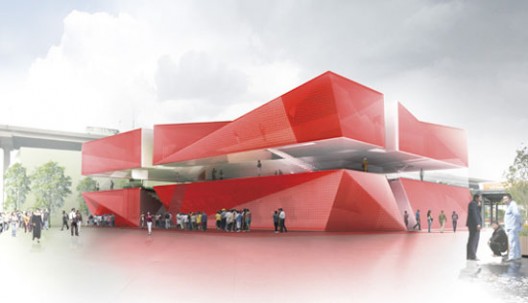


The ground level is extremely porous as to attract passerbyers to the space.  A large auditorium can be configured to accommodate multiple size as a gesture toward bringing all into the dialogue of the building.   The horizontal stepped pieces are spaced in such a way that allows students to climb up the building or use the space as outdoor seating.
For more about the architect..  As seen on archiCentral.

Fawcett House - Contemporary Residence - Armor House

Fawcett House
 
fawcett-house
 
Contemporary Residence
 
santa-ynez-valley-residence
 
Armor House 
 
armor-house
 
ادامه نوشته

پارادایم‎های معماری

۷ پارادایم‎ چارلز جنکس

 چارلز جنکس بر اساس ارزیابی خاص خود از آثار معماری جهان، پاردایم‎ها (Paradigm) یا الگوواره‎های مطرح معماری (از ابتدا تا دوران معاصر) را در هفت پارادایم به شرح زیر طبقه‎بندی می‎کند:

 1. الگوهای مکانیکی این پارادایم از دیدگاه‎های مذاهب مسیحی و یهودی سرچشمه گرفته و از اعتقادات یونانی‎ها در خصوص آفرینش جهان متأثر است. بر اساس این دیدگاه خداوند دنیا را بر پایه قوانین ثابت خلق کرده است که انسان‎ها نیز می‎توانند این قوانین را درک کنند. این دیدگاه به پارادایمی منتهی شد که کل کائنات را به شکل مکانیکی و با ساختارهای ماشین‎مانند در نظر می‎گرفت و هیچ جایی برای خلاقیت در آن باقی نمی‎گذاشت. این پاردایم مکانیکی تقلیل‎گرا و تقدیرگرا از سال 1600 تا 1950 بر عرصه هنر و معماری غرب مسلط بود.

 2. معماری ارگانیک این معماری بر پایه اندیشه نزدیکی بین معماری و محیط زیست شکل گرفته است. این معماری نوعی فناوری الهام گرفته از طبیعت است که الگوهای طبیعی عیناً در آن تکرار می‎شود.

3. معماری مبتنی بر کامپیوتر در این پارادایم برای طراحی فضاهای شهری از کامپیوتر استفاده می‎شود. در این معماری هر شهر روند توسعه و گسترش خاص خود را دارا می‎باشد. این شیوه به نوعی معماری تمسخرآمیز منتهی شد که در طراحی‎های آن (مانند کارهای رم‎کولهاوس) اثرات دنیای مدرن به شکلی متناقض و شعرگونه و تا حدی ناهنجار به تصویر کشیده شده است، شعری خشن و ناهنجار که از تناقض‎ها بوجود آمده است.

 4. معماری حباب‎گونه این پارادایم که بر نظریات آیزنمن استوار می‎باشد، در واقع تلفیقی است از طرح لایه‎های مختلف زمین. این شیوه به سطوح تاشونده متداخل متکی است که معماری قرون وسطایی را با نوعی تزیین که وجه عقلی و ذهنی دارد، به نمایش می‎گذارد.

 5. معماری مبتنی بر اشکال زمین این معماری موجی‎شکل بر وام‎گیری تقریبی از شکل‎های طبیعی موجود بر سطح زمین استوار است. در این پارادایم نیز از تکرار المان‎های خاص استفاده می‎شود، اما این تکرار با تفاوت‎های جزیی همراه است. اضافه شدن عناصر جدید باعث گسترش و تغییر سازمان اولیه می‎گردد. در واقع سازمان اولیه با این تغییرات خود را سازمان‎دهی می‎کند و به این ترتیب در این تکرار در عین همانندی تمایز نیز وجود دارد و تکرار معنای واقعی خود را از دست می‎دهد. این پارادایم بر شعار بیشتر متفاوت است (More is Different) دلالت دارد. این الگوی معماری در کارهایی مثل بندر یوکوهاما کار دفتر معماری F.O.A (فرشید موسوی و آلخاندرو زائراپولو) به کار گرفته شده است. این بندر در واقع منظر مصنوعی (Artificial Landscape) ساخته شده از چوب و فلز می باشد.

 6. معماری کیهان‎شناختی این پارادایم بر بحث سیارات، انرژی و کیهان‎شناسی استوار است. در تمام طول تاریخ، معماری از هستی وام گرفته است، بطوری که با شکل‎گیری ادراک‎های نو درباره هستی، معماری جدید نیز بوجود آمد. این معماری بر گسست تقارن تأکید دارد و دیگر از دیدگاه‎های قدیمی معماری استفاده نمی‎کند.

 7. الگوواره دال معماگونه این پارادایم از نظریات برگرفته از معماری پست‎مدرن است. بر اساس این الگوواره، برخورد با یک اثر معماری نگاه کردن به یک مجسمه سوررئالیستی است که معانی رازآمیز مستقر در آن بر پایه دهنیت بیننده شکل می‎گیرد. این نوع معماری با درک نظم عمومی طبیعت و با استفاده از خطوط سطوح و فضاهای طبیعی شکل می‎گیرد. معانی این رویکرد از معماری به طبیعت و تداعی آن در ذهن ناظر وابسته است. الگوواره دال معماگونه این پرسش را مطرح می‎کند که در دنیای معاصر که سیاست، مذهب، اجتماع و فلسفه یکسانی وجود ندارد، آثار معماری را چگونه طراحی و اجرا کنیم؟ چارلز جنکس پس از تشریح هفت پارادایم فوق، این پرسش را مطرح می‎سازد آیا در ابتدای پیدایش یک الگوواره جدید قرار داریم یا اینکه هفت پارادایم یاد شده بخش‎های به هم پیوسته یک الگوواره جدید هستند؟

سبکهای معماری

سبکهای معماری

آلترناتیو سبد

آلترناتیو کتابخانه

آلترناتیو دید از منشور

آلترناتیو فضای پر وخالی

آلترناتیو واژگون


ارمغانهای ایران به جهان معماری

ارمغانهای ایران به جهان معماری :« جناغ و کلیل »

در دل استان زرخیز خوزستان و نزدیک کشتزارهای نیشکر هفت تپه بازمانده های شهر باستانی  دورانتاش به نام چغازنبیل خود نمایی میکند این کوه دست ساز را که هنرمند مردمی با فرهنگ در هزاره دوم پیش از میلاد مسیح در میان دشت برافراشته است نه تنها در زمان خود بی همتا بوده بلکه پیش و پس از آن زمان هم کمتر نمونه ای همانند آن پدید آمده است .

ادامه نوشته

معماری قرن 21

با سلام

امروز چند تا عکس ازپروژه جدید آقای فوکساس این آرشیتکت ایتالیای آوردم و بعد دوباره می یام تا بازهم نمونه هایی دیگر رو از معماری امروز که بیشتر داره  به سمت ساختار پیش میره می یارم . به راستی...

چرا ؟


این پروژه مربوط به مسابقه ای هست که ماکسیمیلیانو و داریانو فوکساس برنده مسابقه فرودگاه شنزن چین شدن می باشد .

ادامه نوشته